



 ️




The Star That Loved to Share Hvězda, která se ráda dělila
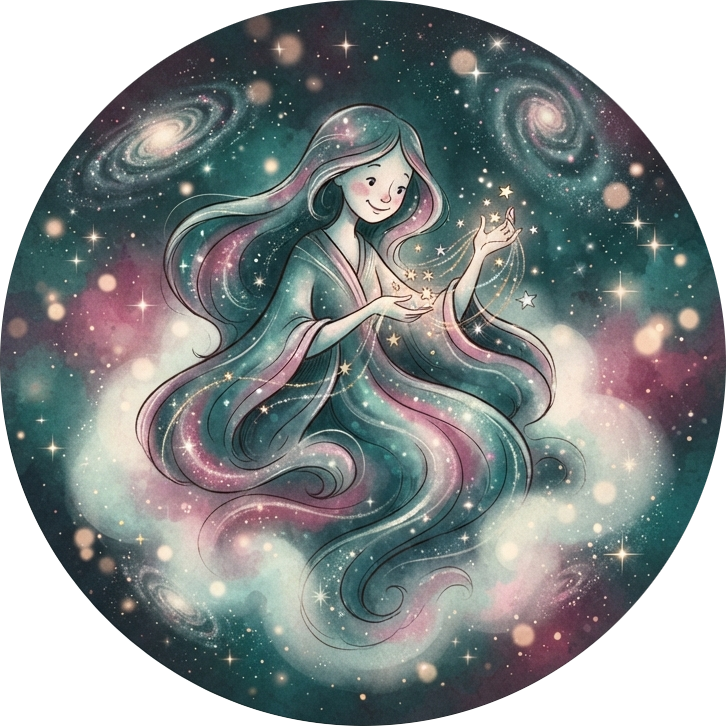
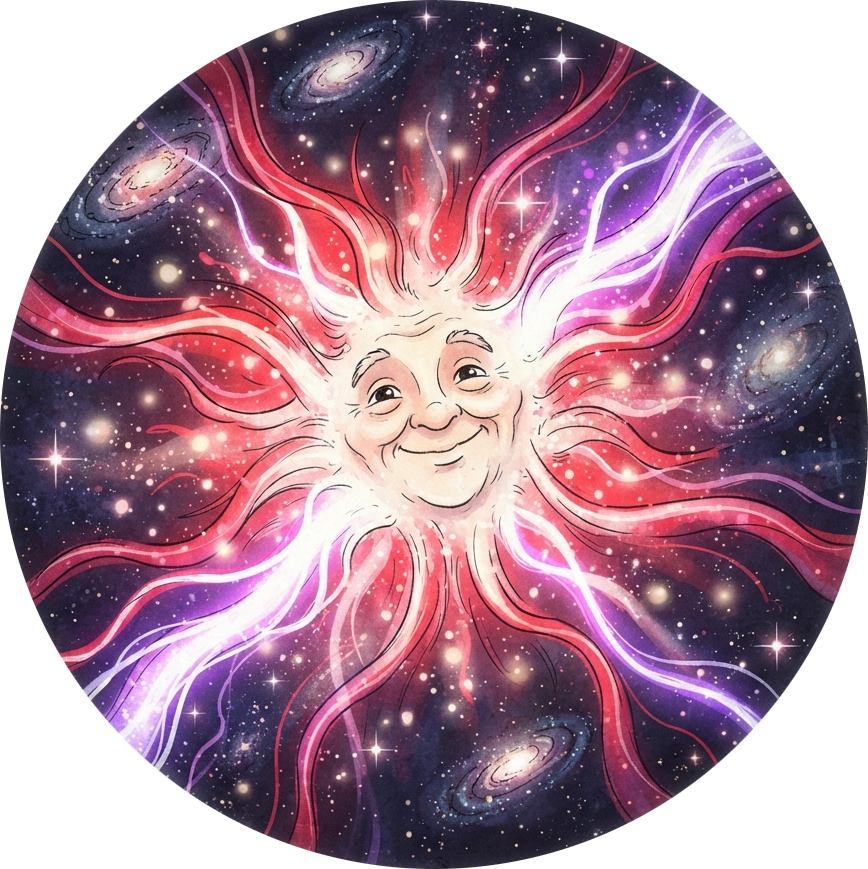
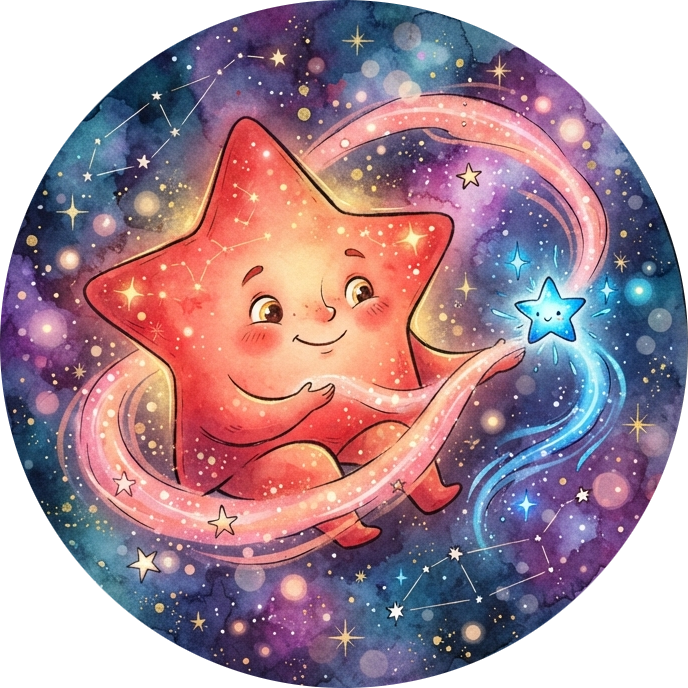
Once upon a time, in a quiet corner of the velvet-black galaxy, lived two best friends who were almost impossible to separate. One was Ignis the Giant, a magnificent red star glowing warmly in the darkness. He loved stretching his enormous clouds of gas far across space, shining proudly among the stars. The other was Azure the Swift, a tiny but brilliant blue star that danced around Ignis in a close, speedy orbit, laughing as he raced through the gentle streams of Ignis's glowing outer layers.
For countless ages, they shared a beautiful cosmic dance. But as time passed, Ignis began to change. He grew older and cooler, swelling larger and larger until he became a huge red giant. His outer layers became thinner and more fragile, slowly drifting away from the star that had held them for so many years.
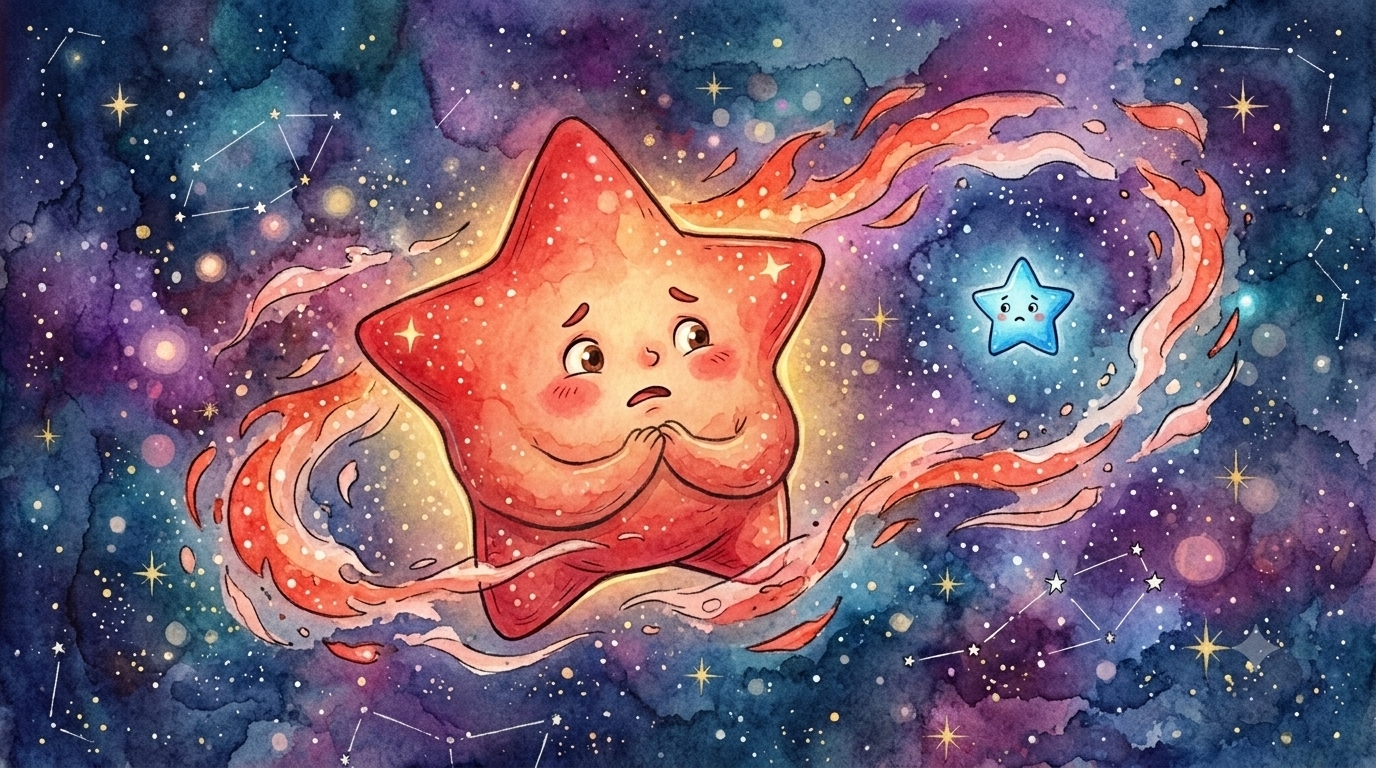 "Oh dear," Ignis rumbled, his voice deep and slow like distant thunder. "I have grown so large that I can no longer keep all my outer layers close to me. Azure, I worry that parts of me will drift away into the darkness, scattered and alone."
Seeing that his oldest friend was troubled, Azure quickly flew closer, his blue light shimmering with kindness. He was small, but he was incredibly bright and full of youthful energy.
"Don't worry, Ignis!" Azure chimed happily. "You aren't disappearing, my friend. You are simply sharing a part of yourself. I can help you! Let your extra gas come to me, and we will keep dancing together."
And then something truly wonderful happened. From Ignis's swollen outer layers, a glowing stream of gas began to flow toward Azure—a beautiful bridge of stardust shining in shades of pink and orange. Azure caught the sparkling material with a joyful smile, wrapping himself in the warmth and light of his old friend's gift.
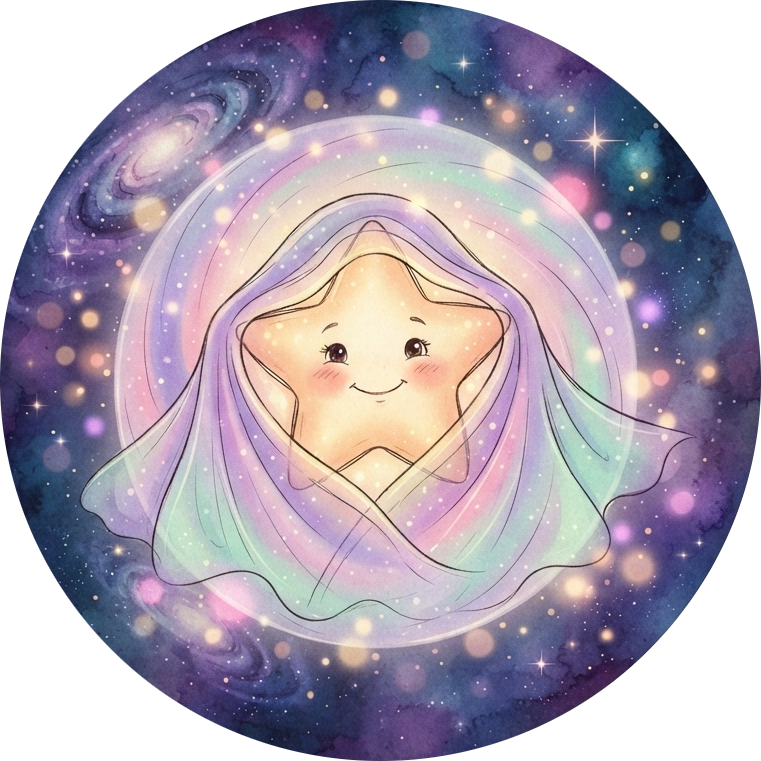
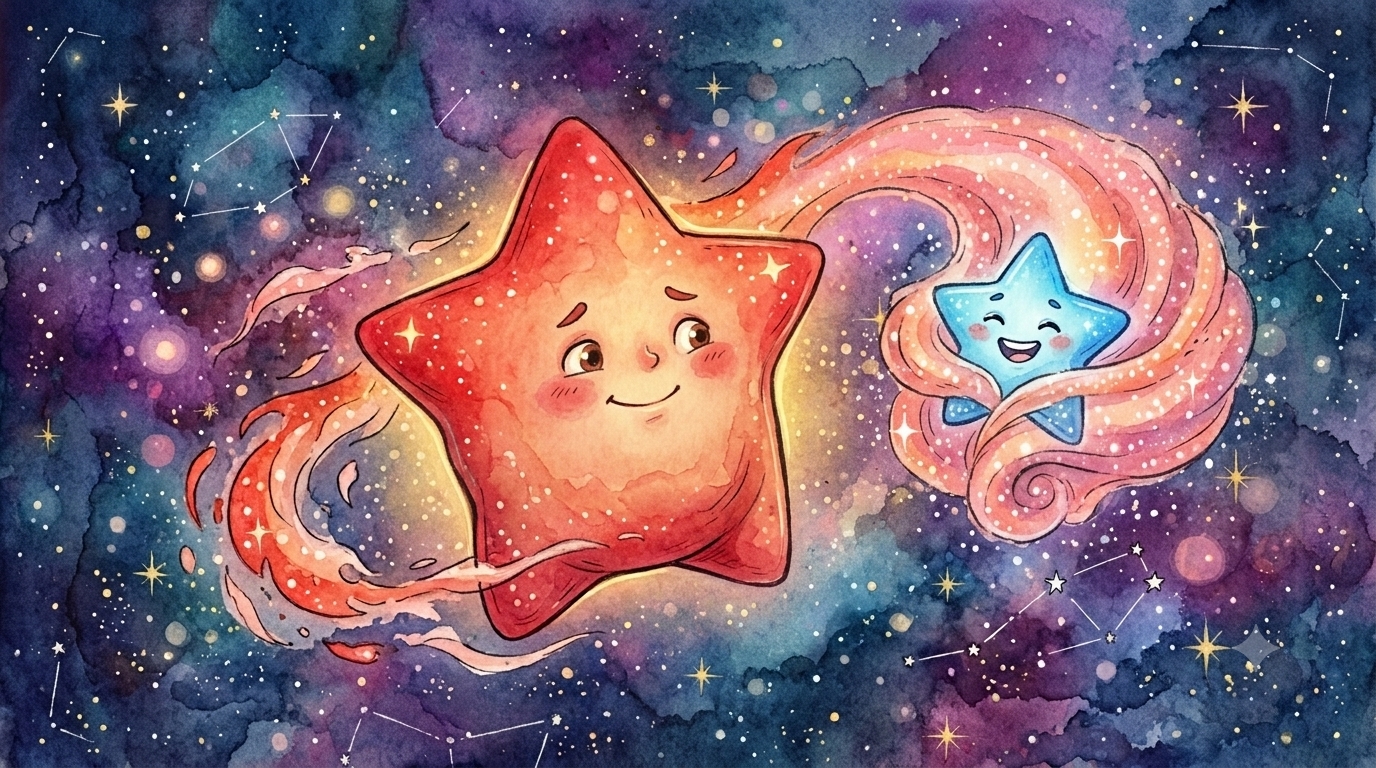 Ignis felt lighter and happier, knowing that his precious material was not lost but had found a new home. Azure, meanwhile, began to shine even brighter, surrounded by a magnificent cloak of gas and stardust from his companion. They were no longer simply two stars traveling through space—they were a team, a remarkable pair whose friendship painted the universe with light.
And whenever other stars looked their way, they saw something extraordinary: not just two stars, but a beautiful dance of sharing, change, and friendship. Ignis and Azure showed the universe that even when things change and we grow older, we can still shine brightly—especially when we have someone beside us who helps us through the journey.
Bylo nebylo, v tichém koutku vesmíru, kde byla temnota hebká jako samet, žili dva nejlepší kamarádi, kteří téměř nikdy nebyli od sebe. Jeden z nich se jmenoval Ignis Obr. Byl to nádherný červený obr – obrovská hvězda, která hřála a zářila uprostřed temnoty. Rád se rozpínal do všech stran a rozprostíral své obrovské oblaky plynu daleko do vesmíru. Druhým byl Azure Rychlý, malá, ale nesmírně jasná modrá hvězdička, která kolem Ignise obíhala v těsné a rychlé dráze a smála se, když prolétala proudy jeho zářících vnějších vrstev.
Po nespočetné věky spolu tančili svůj nádherný vesmírný tanec. Jenže jak čas plynul, Ignis se začal měnit. Stárnul, ochlazoval se a pomalu se zvětšoval, až z něj byl obrovský červený obr. Jeho vnější vrstvy byly stále řidší a volnější a některé z nich se pomalu začaly vzdalovat od hvězdy, která je po tak dlouhou dobu držela pohromadě.
„Ach jo,“ zabručel Ignis hlubokým hlasem, který připomínal vzdálené hřmění. „Vyrostl jsem tak moc, že už nedokážu udržet všechny své vnější vrstvy u sebe. Azure, bojím se, že se některé části mě jednou rozletí do temnoty vesmíru a ztratí se.“
Azure hned poznal, že jeho starý přítel má starosti, a přiletěl blíž. Byl sice maličký, ale zářil obrovskou energií a radostí.
„Neboj se, Ignisi!“ zazvonil vesele. „Ty přece nezmizíš, můj příteli. Jen se podělíš o část sebe, které už máš příliš mnoho. Já ti pomůžu! Pošli mi svůj přebytečný plyn a budeme dál společně tančit.“
A tehdy se stalo něco nádherného. Z Ignisových rozlehlých vnějších vrstev začal proudit zářivý proud plynu – překrásný most hvězdného prachu, který se vlnil vesmírem v odstínech růžové a oranžové. Azure ho s radostným úsměvem přijal a obalil se teplem a světlem daru svého starého přítele.
Ignis se cítil lehčí a šťastnější, protože věděl, že se jeho vzácný materiál neztratil, ale našel nový domov. Azure mezitím zářil ještě jasněji než dříve a obklopoval ho nádherný plášť z plynu a hvězdného prachu jeho společníka. Už to nebyly jen dvě hvězdy putující vesmírem – byli to nerozluční partneři, jejichž přátelství dokázalo rozzářit okolní vesmír.
A kdykoli se jiné hvězdy podívaly jejich směrem, neviděly jen dvě hvězdy, ale nádherný tanec změny, sdílení a přátelství. Ignis a Azure ukázali vesmíru, že i když se věci mění a člověk stárne, stále může zářit jasně – zvlášť když má vedle sebe někoho, kdo mu pomůže pokračovat v cestě.
⭐ For Young Explorers: A Starry Friendship ⭐ Pro malé průzkumníky: Hvězdné přátelství
- Two Stars Together: Many stars do not travel through space alone. Some live in pairs called binary star systems, where two stars orbit around each other.
- Sharing Gas: When a giant star grows old, it can become so large that some of its outer gas flows toward its companion star.
- A Cosmic Makeover: The smaller star can collect this material and become brighter and more energetic, showing that even stars can help each other grow!
- Dvě hvězdy spolu: Mnoho hvězd necestuje vesmírem samo. Některé žijí v párech zvaných dvojhvězdné systémy, kde dvě hvězdy obíhají kolem sebe.
- Sdílení hvězdného plynu: Když velká hvězda zestárne, může se tak zvětšit, že část jejího plynu začne proudit k její hvězdné kamarádce.
- Vesmírná proměna: Menší hvězda může tento materiál přijmout a začít zářit jasněji a silněji. I hvězdy si totiž mohou navzájem pomáhat růst!
🔬 Deep Dive for Parents: Binary Stars and Mass Transfer 🔬 Podrobněji pro rodiče: Dvojhvězdy a přenos hmoty
A large fraction of stars exist in binary or multiple star systems. When one star evolves and expands into a red giant, its outer layers can extend beyond its Roche lobe—the region around a star where material remains gravitationally bound to it. Once this boundary is exceeded, gas can flow toward the companion star through a process called Roche lobe overflow. The transferred material can form an accretion stream or disk around the companion, changing its appearance and evolution. In some systems, mass transfer can even trigger powerful eruptions, such as novae, or influence the future fate of both stars.
Velká část hvězd se nachází v dvojhvězdných nebo vícenásobných systémech. Když se jedna z hvězd vyvine a zvětší se na červeného obra, její vnější vrstvy mohou dosáhnout za hranici tzv. Rocheovy oblasti – prostoru, kde je materiál stále gravitačně vázán k dané hvězdě. Pokud hvězda tuto hranici překročí, plyn může začít proudit k jejímu společníkovi v procesu známém jako přetok přes Rocheovu mez. Přenesený materiál může vytvořit akreční proud nebo disk kolem druhé hvězdy a výrazně ovlivnit její vzhled i další vývoj. V některých případech může přenos hmoty vést i k mohutným výbuchům, například novám, a změnit budoucnost obou hvězd.
🎨 Hands-On Activity: Create a Cosmic Binary System! 🎨 Tvořivá aktivita: Vytvoř si vlastní dvojhvězdu!
1. The Star Dance Experiment
Take two balls of different sizes and place them on a table. Move them around a common point to create your own binary star system. Try different distances—what happens when the stars get closer?
2. The Cosmic Sharing Challenge
Use two cups and some small beads, rice, or sand. Fill one cup with more material than the other. Slowly tilt the first cup and let some of its contents flow into the second one—just like gas moving from one star to another. Can you create a new balance between the two stars?
1. Tanec dvojhvězdy
Vezmi dva míčky různé velikosti a polož je na stůl. Pohybuj s nimi kolem společného středu a vytvoř si vlastní dvojhvězdný systém. Zkus měnit vzdálenost – co se stane, když se hvězdy přiblíží?
2. Vesmírné sdílení
Vezmi dva kelímky a naplň je drobnými korálky, rýží nebo pískem. Do jednoho dej více materiálu než do druhého. Pomalu nakláněj první kelímek a nech část obsahu přetéct do druhého – podobně jako plyn proudící z jedné hvězdy na druhou. Dokážeš vytvořit novou rovnováhu mezi dvěma hvězdami?
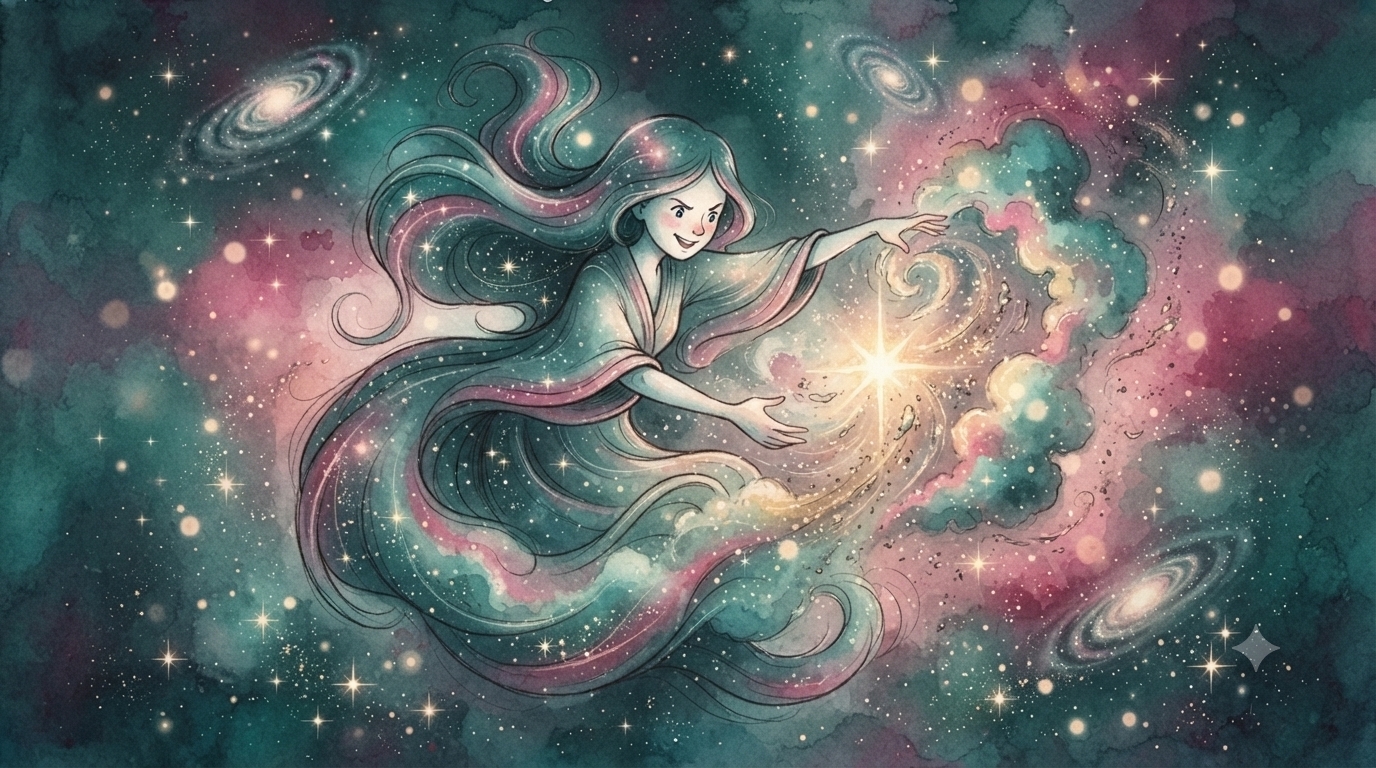 "It is time to grow," Nebula whispered one day, her voice full of excitement. With her gentle gravity, she slowly gathered the tiny grains of dust closer and closer together. "Come closer, little ones. Let us make something new." As the cloud became denser, its center grew warmer and warmer. The tiny particles began to wiggle, swirl, and bump into one another, just like your hands warming up when you rub them together on a cold winter day. "Keep dancing," Nebula encouraged them. "You are creating something amazing!"
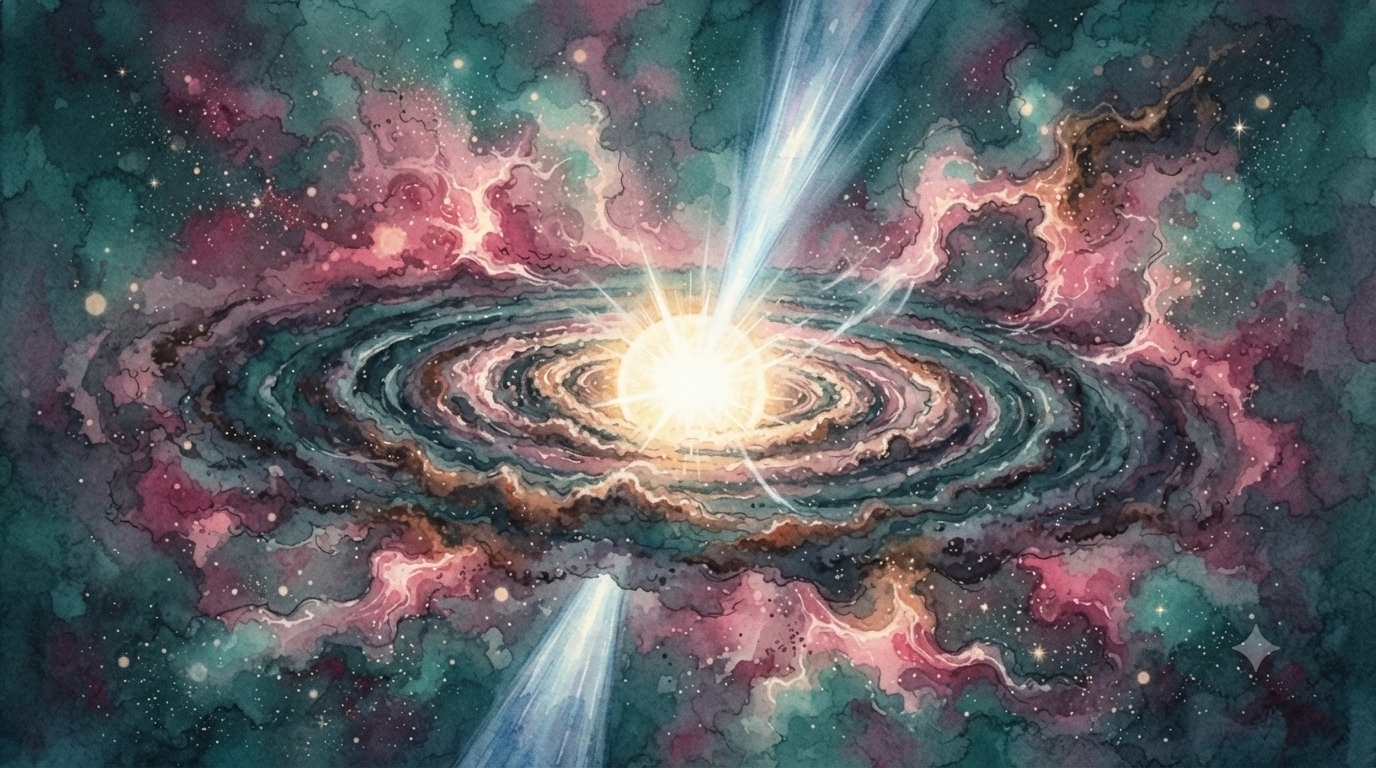 Nebula the Weaver smiled as her colorful clouds shimmered with pride. She could feel that her little star was ready to begin its own journey among the heavens. With one final gentle embrace, she helped Spark settle into its new home. "You are ready now, my brave little one," she whispered. With a joyful burst of light, Spark began to shine by itself, transforming from a tiny cloud of dust into a brilliant young star that would illuminate the universe for billions of years.
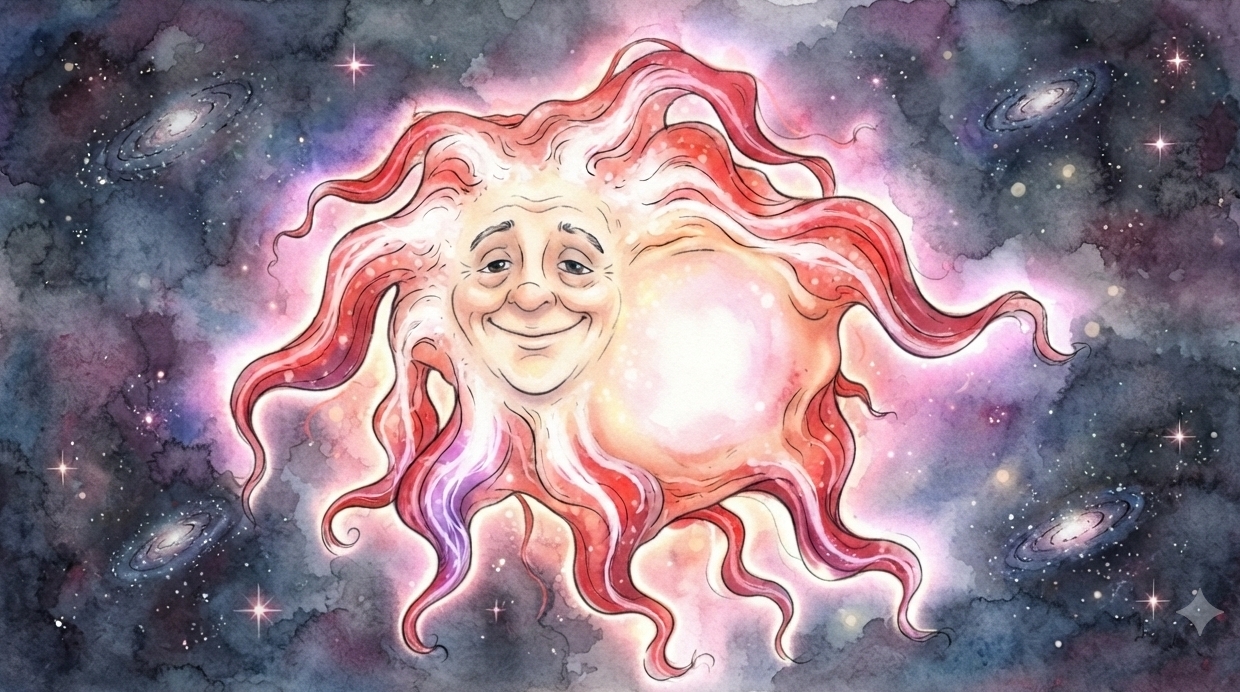 "My time has come," Solus whispered into the vast silence of space. He wasn't afraid; instead, his voice was filled with quiet excitement. He knew his greatest moment was still ahead. Throughout his long life, deep within his blazing heart, he had been forging precious elements—carbon for living things, oxygen to breathe, calcium for strong bones, and finally, iron. But he knew he couldn't keep these treasures forever. "It's time to share these gifts with the rest of the universe," he decided.
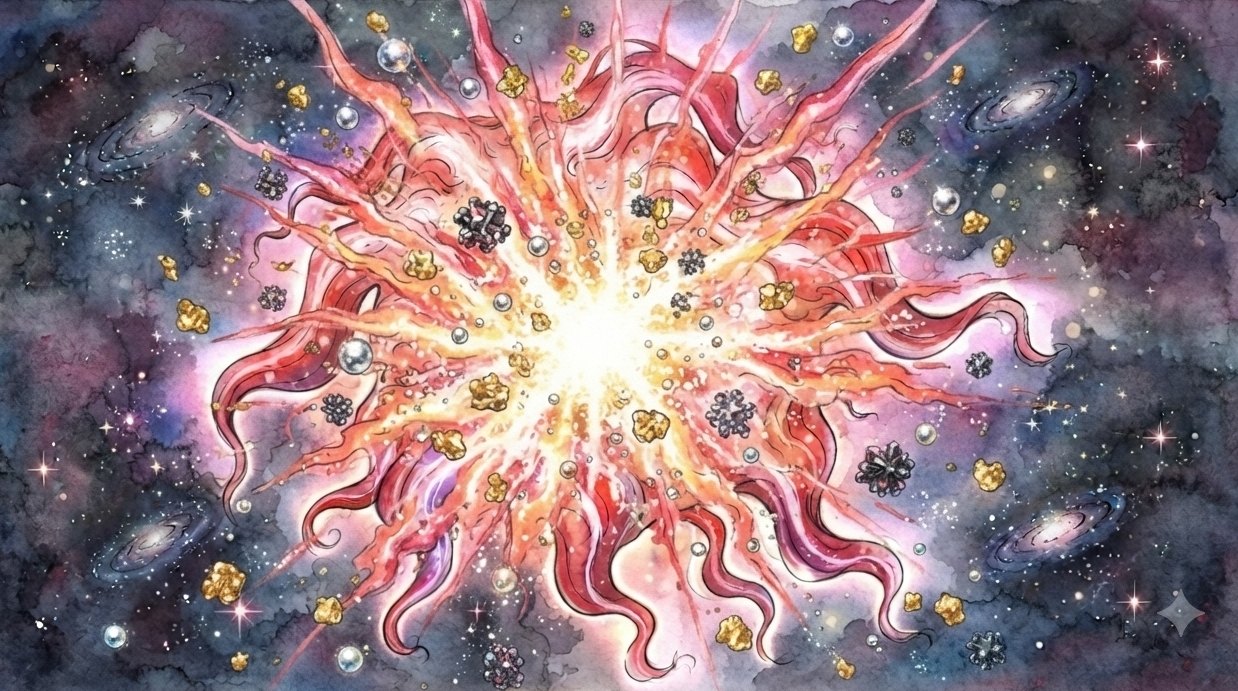 But the most magical part came afterward. Solus scattered his treasures far across the galaxy—the iron for our blood, the calcium for our bones, the carbon in our cells, and even the gold and silver used to make beautiful rings. Tiny, glowing pieces of Solus drifted through space until they found new homes. They became part of new stars, new planets, new moons, and eventually even the tiny atoms that make up you and me. Solus didn't truly disappear. Instead, he became millions of tiny, sparkling seeds, helping the universe grow and create new worlds. So every time you take a breath of oxygen or hold a piece of metal in your hand, remember: those precious atoms were once forged inside a magnificent star like Solus, who gave everything he had so the universe could become richer, brighter, and full of life.

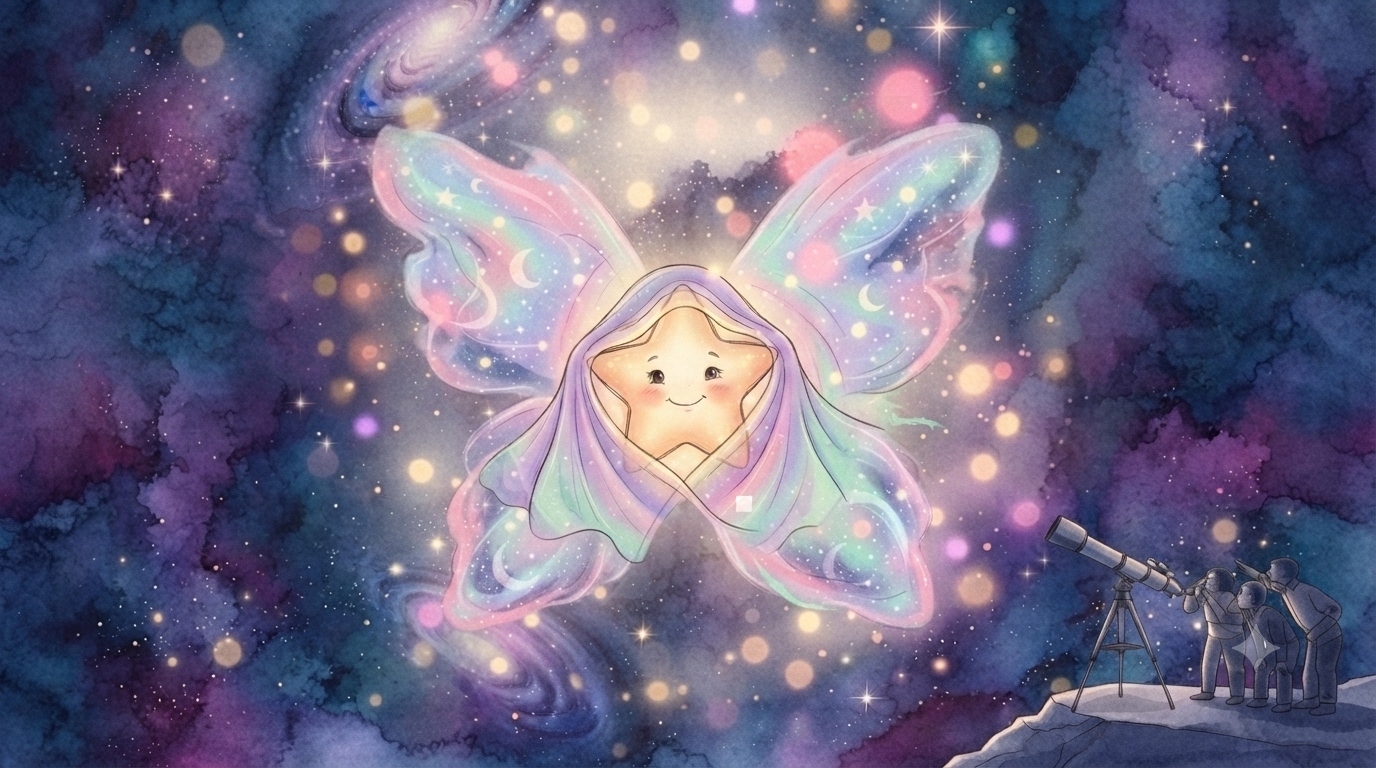
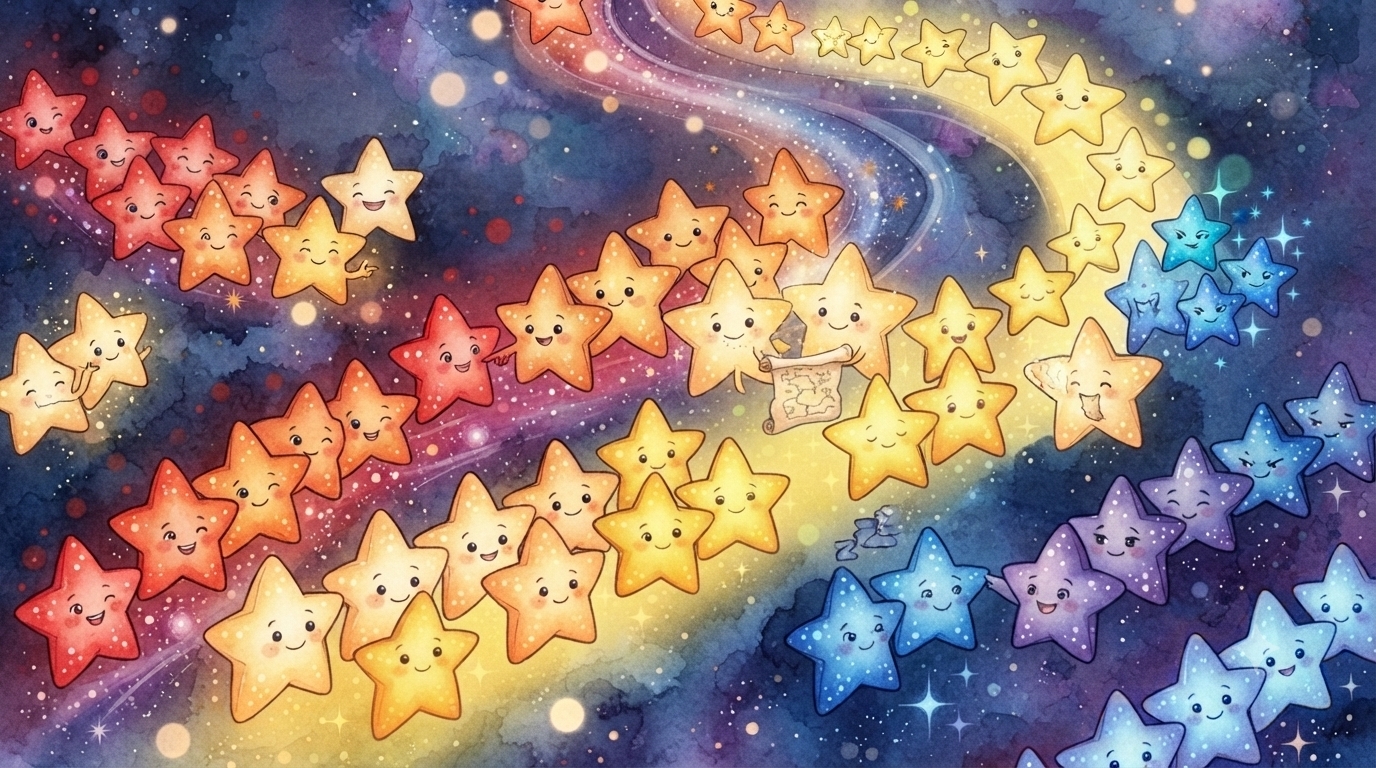

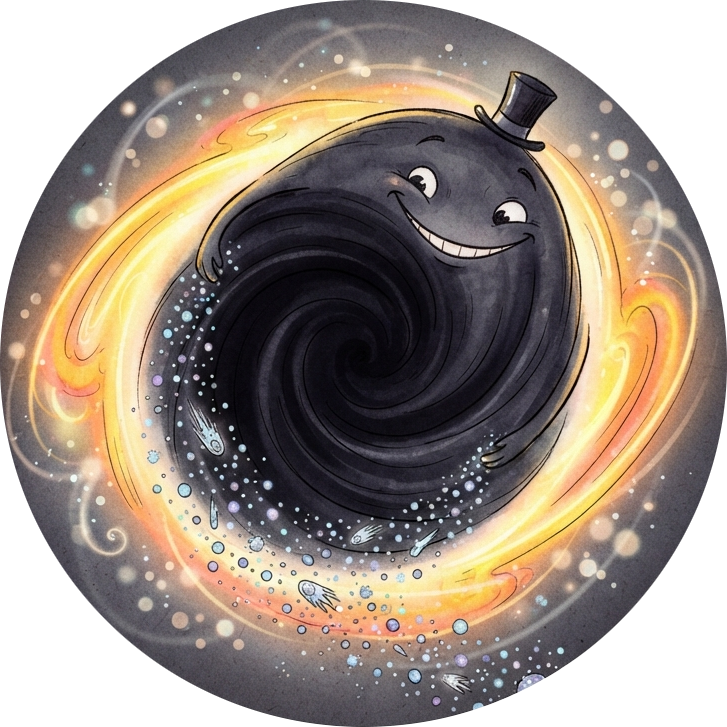
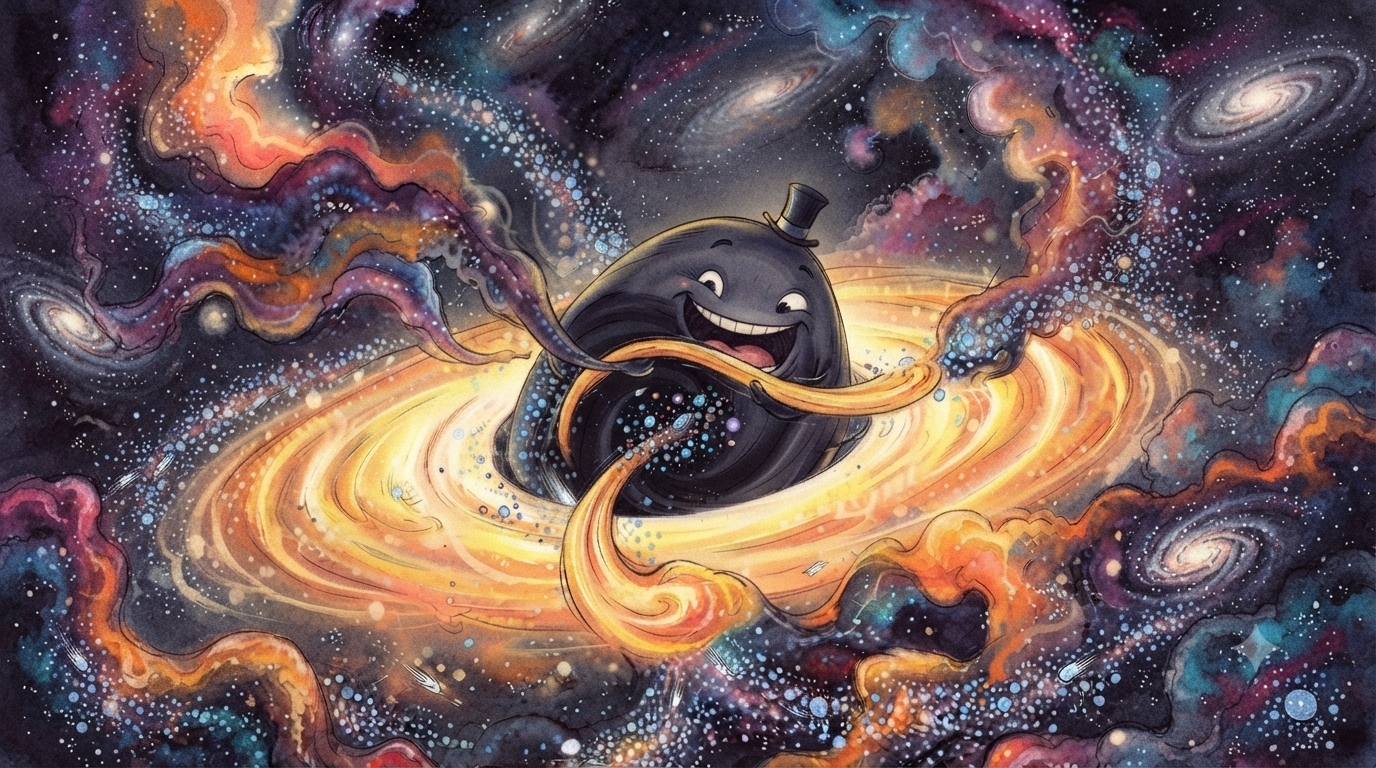 "Oh dear," Barnaby sighed, his voice as deep and gentle as a cello. "I've gone and eaten everything again. Am I really that greedy? I don't want to cause anyone any trouble." Barnaby worried that the stars didn't like him because he was always "cleaning up" the space around him. He felt like one great big, dark nuisance, so he hid quietly in the shadows, hoping nobody would notice him.
 One day, a bright little star named Spark came dancing through space and stopped to visit. She looked around and gasped with delight. "Wow, Barnaby!" she exclaimed, twirling happily. "Look how wonderfully tidy everything is! It sparkles all around here! You're not greedy at all—you’re the universe's very own space vacuum! You're helping all of us keep our home beautiful by sweeping away all that extra dust that gets in everyone's way."
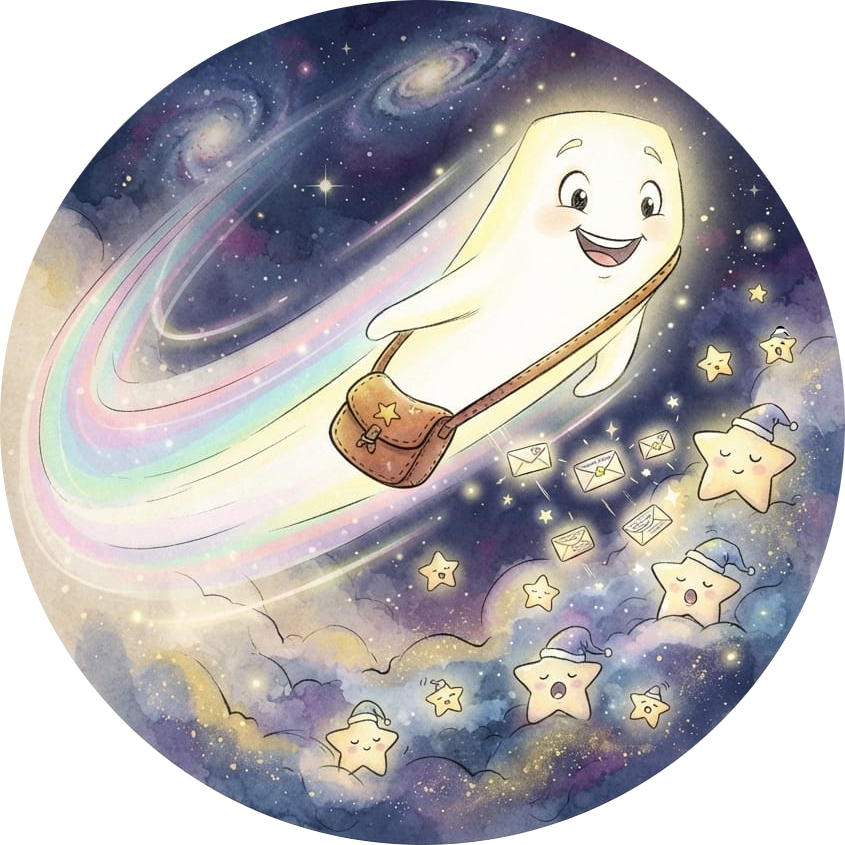
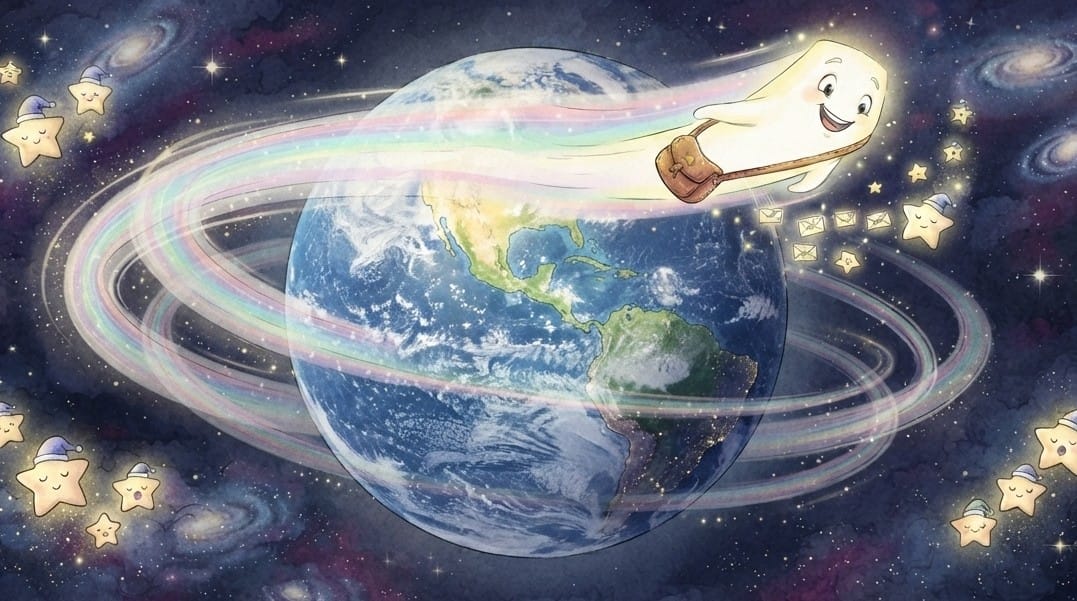 "Delivery for you!" Lumi chirps with a bright smile as she arrives on your windowsill like a ray of morning sunshine. "I just came from the Sun, and guess what? It took me only eight minutes to get here!" She stretches her glowing arms and fills the room with a warm golden touch. Because the Sun is our closest star, Lumi's postcard arrives quickly and clearly—like a fresh message delivered right on time. "Fresh sunshine, exactly as promised!" she says proudly.
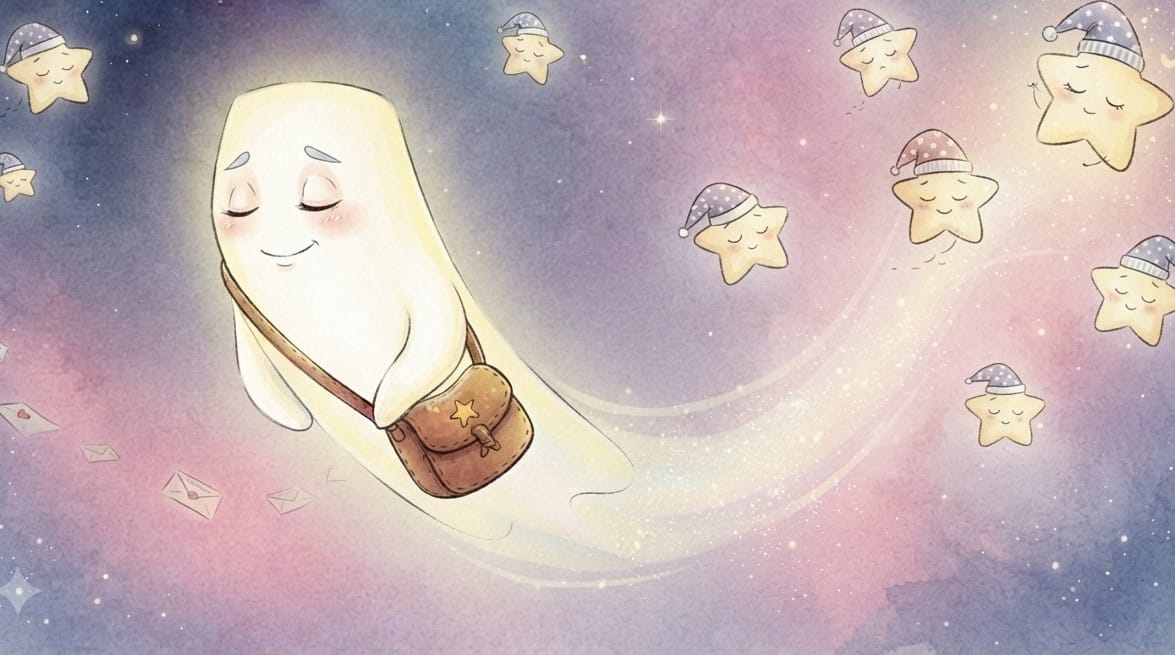 Lumi absolutely loves her job because she gets to discover the hidden wonders of the galaxy along the way. "The universe is so enormous and amazing," she says, her eyes sparkling like diamonds. "Sometimes my messages travel for millions of years before they finally arrive!" Every time you look up at the night sky, you are looking into Lumi's giant, never-ending cosmic post office. Some stars are nearby friends sending quick little notes, while others are ancient stars sending messages from a time long before humans existed.
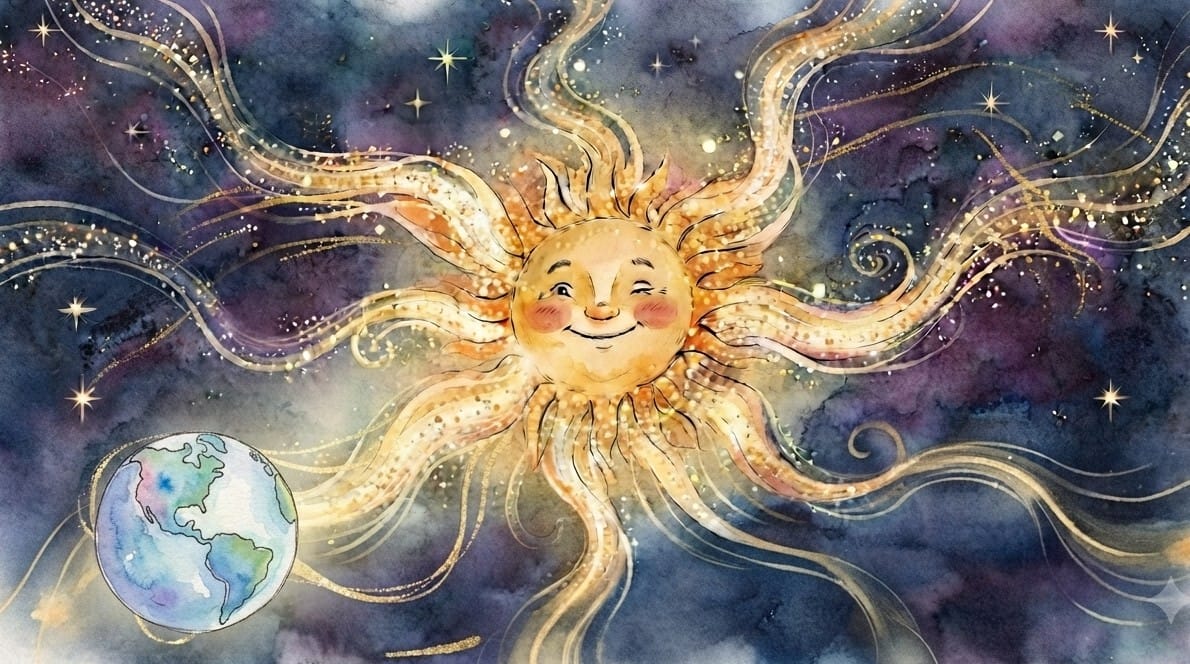
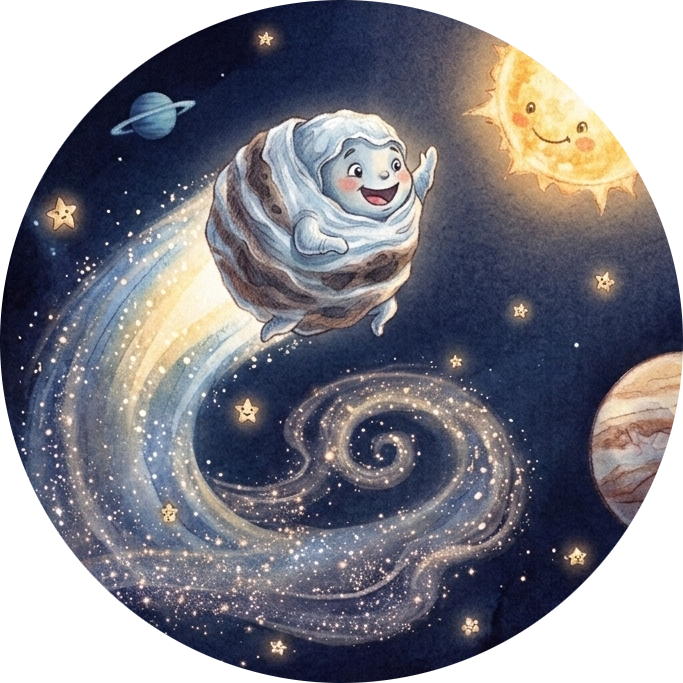
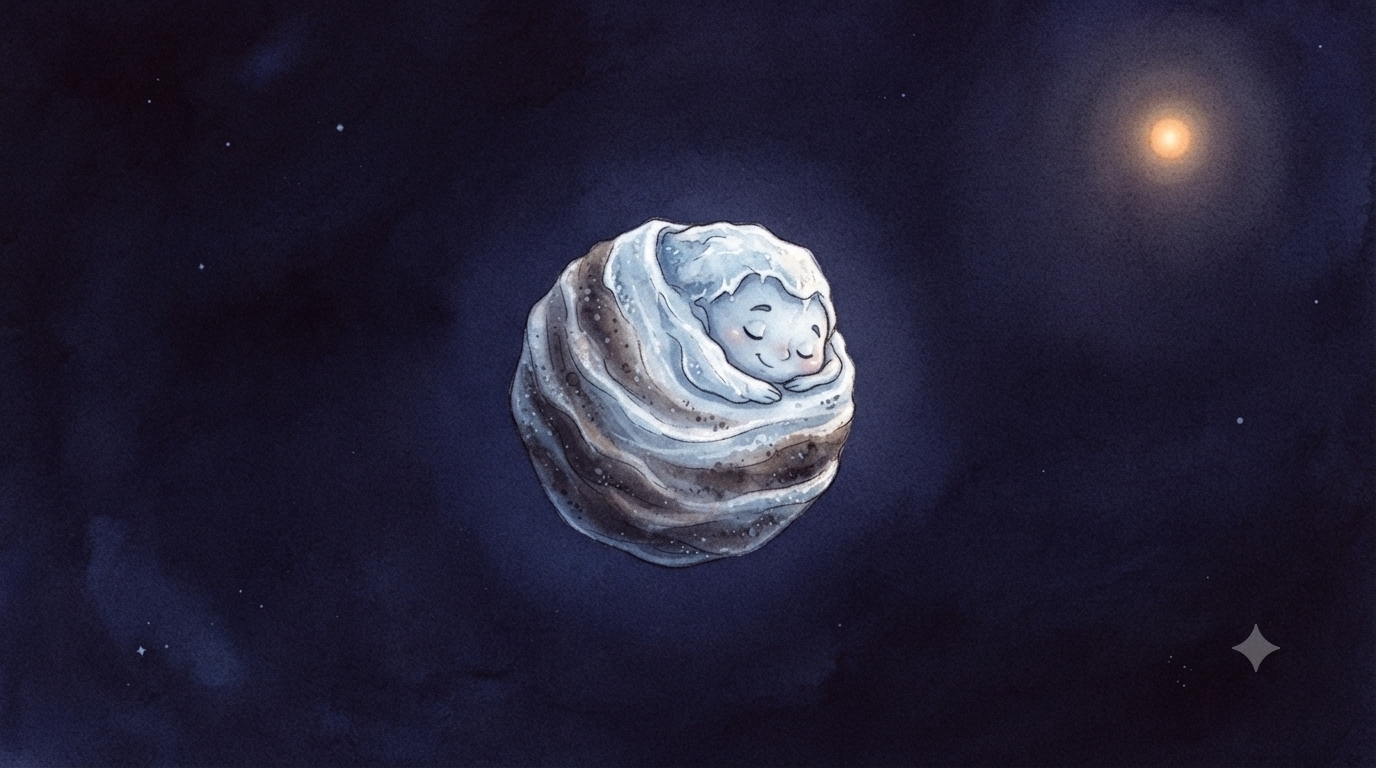 One day, her long journey carried her closer and closer to the Sun. The icy cold slowly melted away. "Oh! Is that you, Sun?" Cleo called excitedly as she felt the first warm rays tickle her nose. "You're even brighter than I imagined!" She wasn't just a quiet snowball anymore. She could feel herself waking up. "I feel... funny. No, not funny—excited! It's like I'm finally getting ready for the biggest show of my life!"
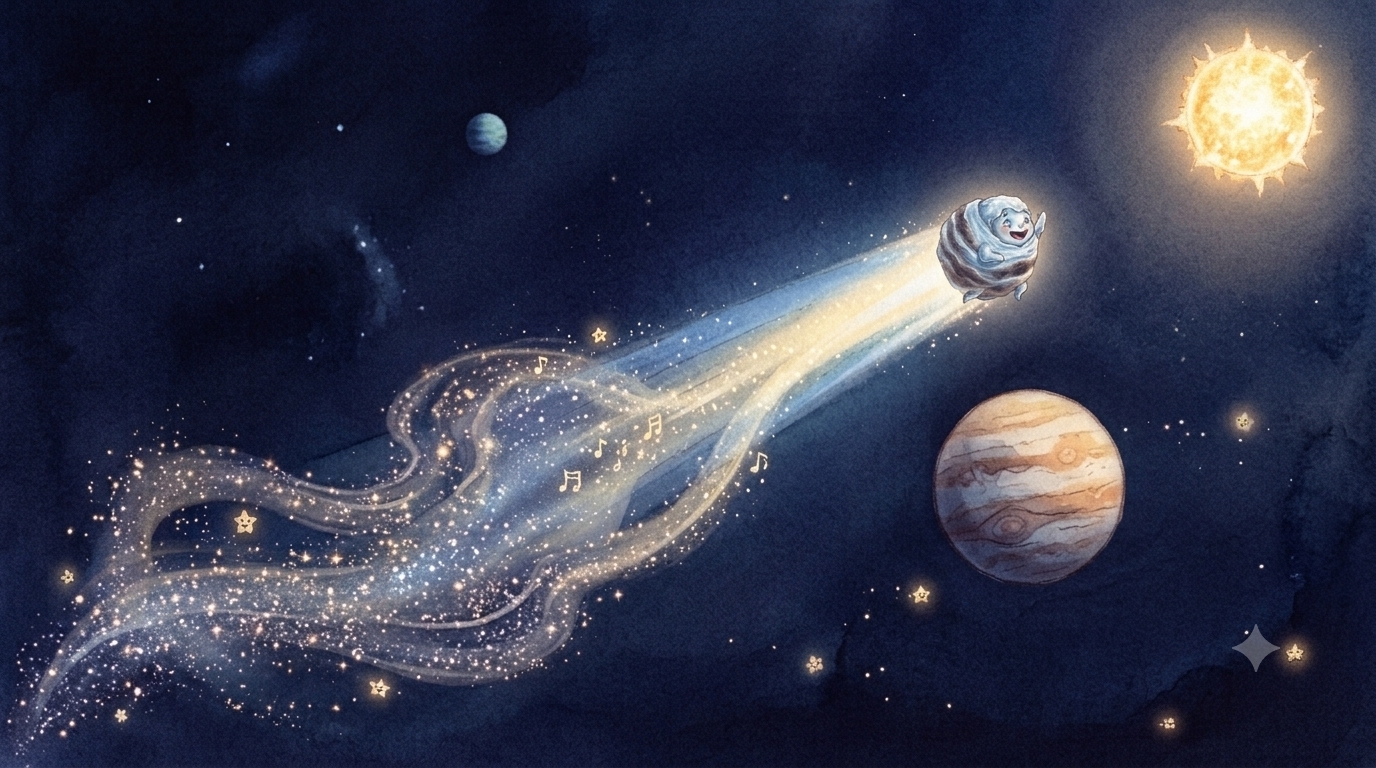 But every great performance must come to an end. Cleo soon felt the gentle pull of her long journey back toward the cold outer reaches of the Solar System. "That was wonderful," she smiled as she slowly drifted away from the Sun. "I'll keep the memory of your warm hugs with me until we meet again."
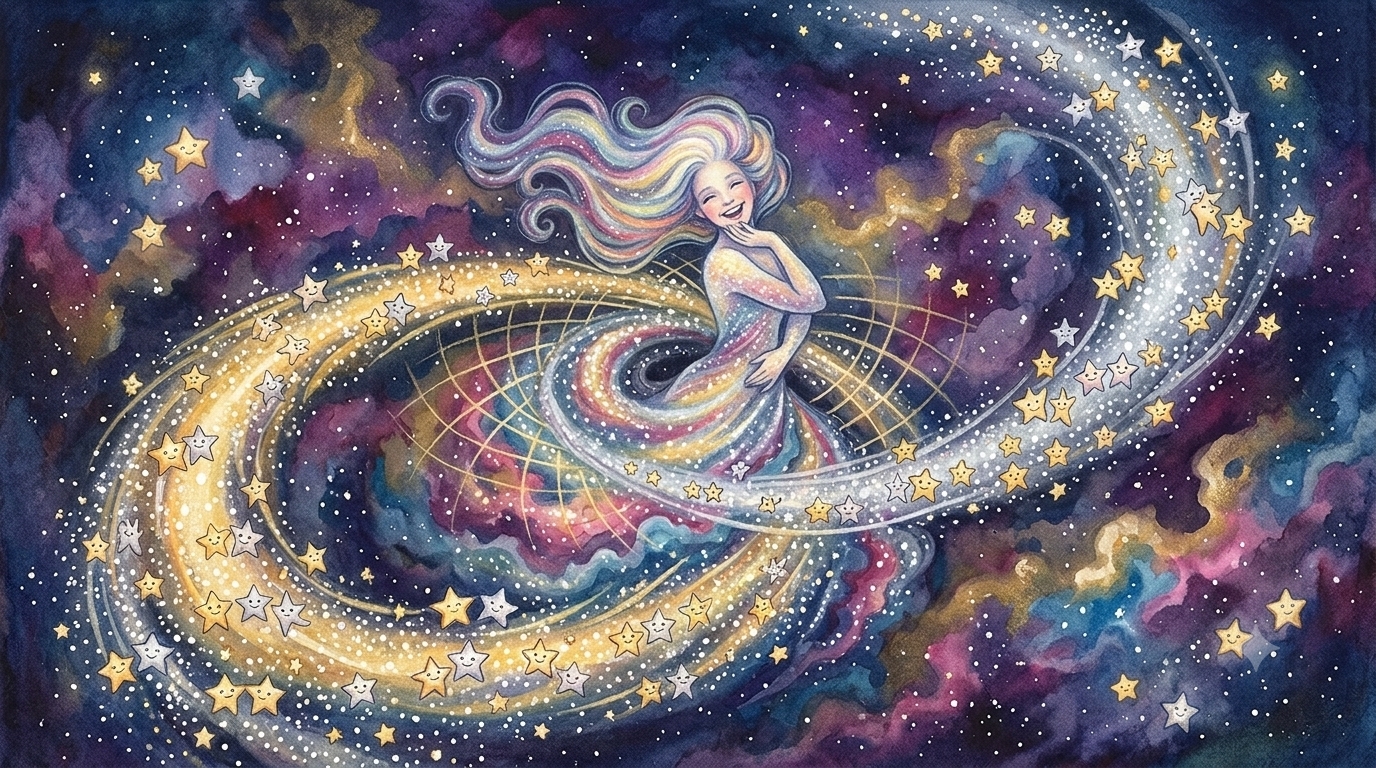 As the stars rushed toward her, Milky Way began to spin. "Wheeee!" she laughed, twirling faster and faster. "Follow my rhythm!" She taught them the Great Cosmic Waltz, showing them how invisible gravity would gently hold them together. "Stay close!" she called. "If we dance together, we'll become more than a collection of stars—we'll become a home." The stars twinkled with delight as they spun beside her, weaving long, graceful spiral arms of golden and silvery light that stretched across the galaxy.
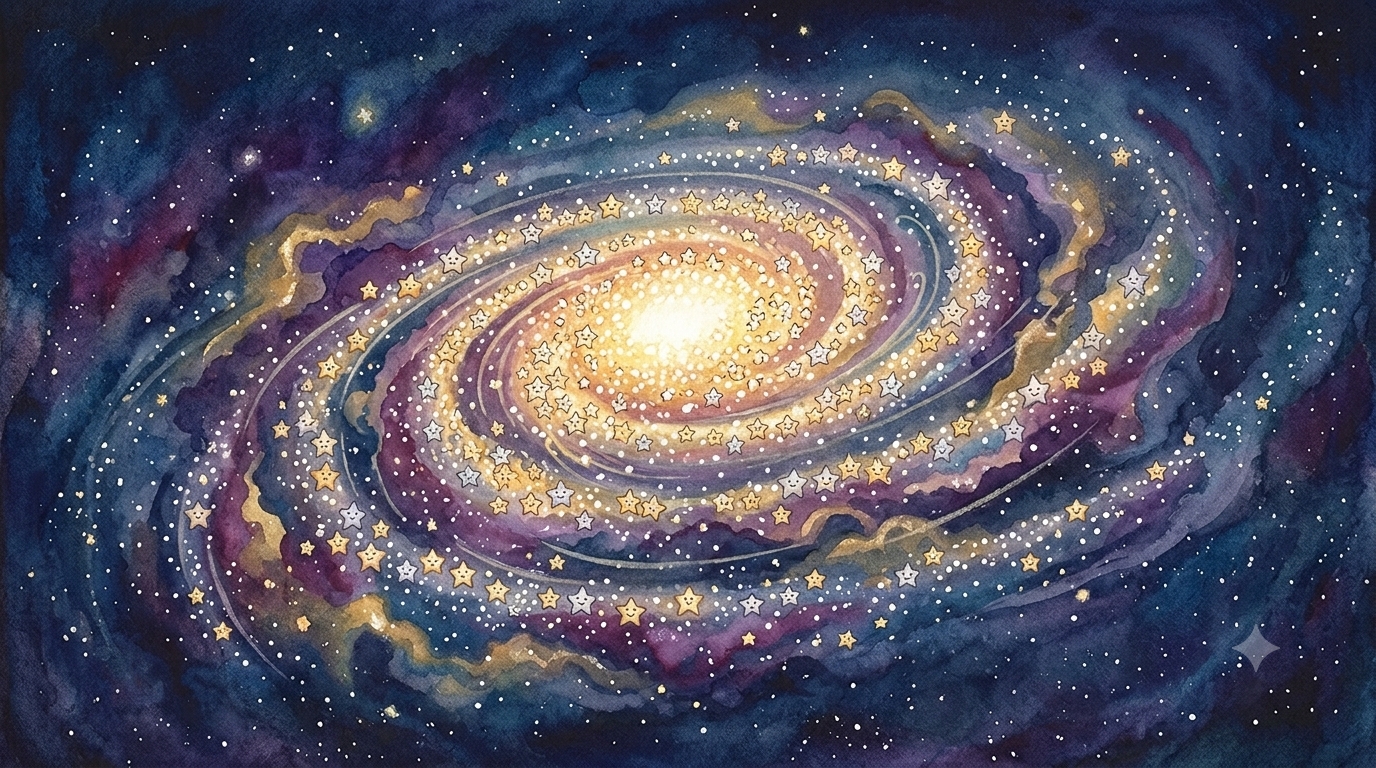 "And remember," Milky Way whispered as her spiral arms stretched across the darkness, "even if you live at the very edge of my galaxy, you are still part of our family. Gravity will always keep us connected." She looked proudly at the magnificent glowing pinwheel she had created, shining against the endless black of space. "We're no longer just stars," she said softly. "Together, we're a galaxy."
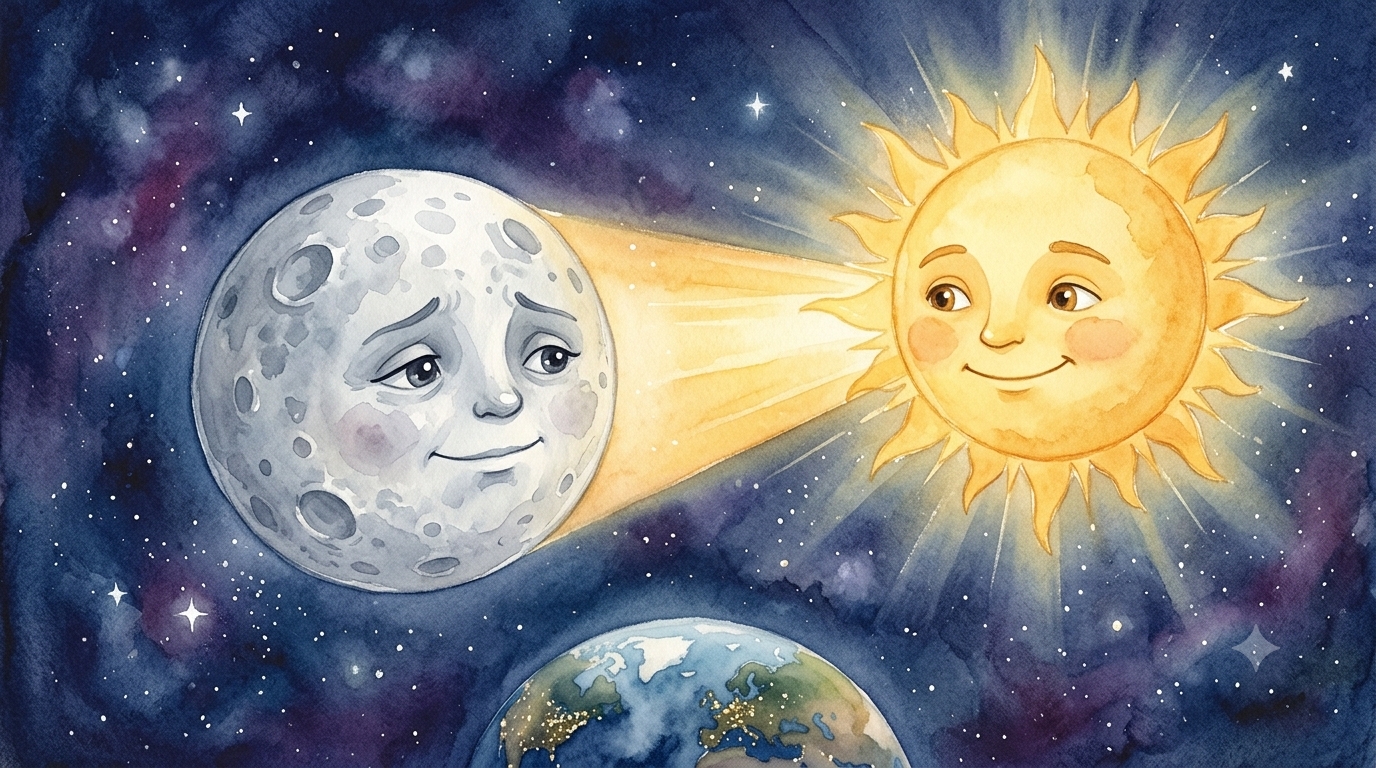 One evening, the Sun noticed his friend feeling especially gloomy. "Why so quiet, little Guardian?" he asked, sending a warm golden beam across the sky. When Luna shared her secret, the Sun smiled kindly. "Oh, Luna, you have something very special already! You don’t need to create your own fire. You can share my light." He sent his rays toward her rocky surface, and Luna discovered that her dusty, crater-filled ground could gently bounce his light back into space.
 Luna was never lonely, because she knew that even a tiny crescent of light could bring wonder to the night. "Rest peacefully, little ones," she whispered to the dreaming world. "I will watch over your dreams until my best friend returns to fill the sky with morning light."
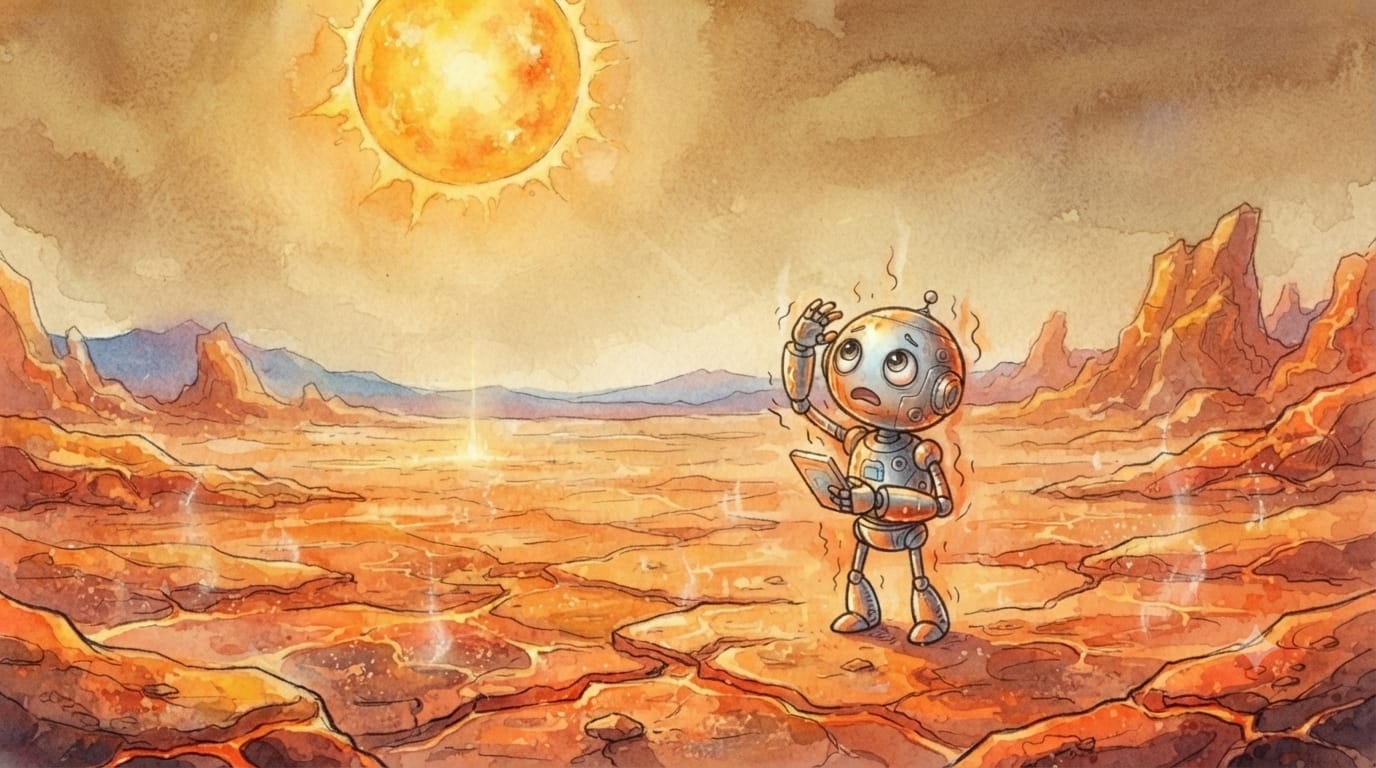
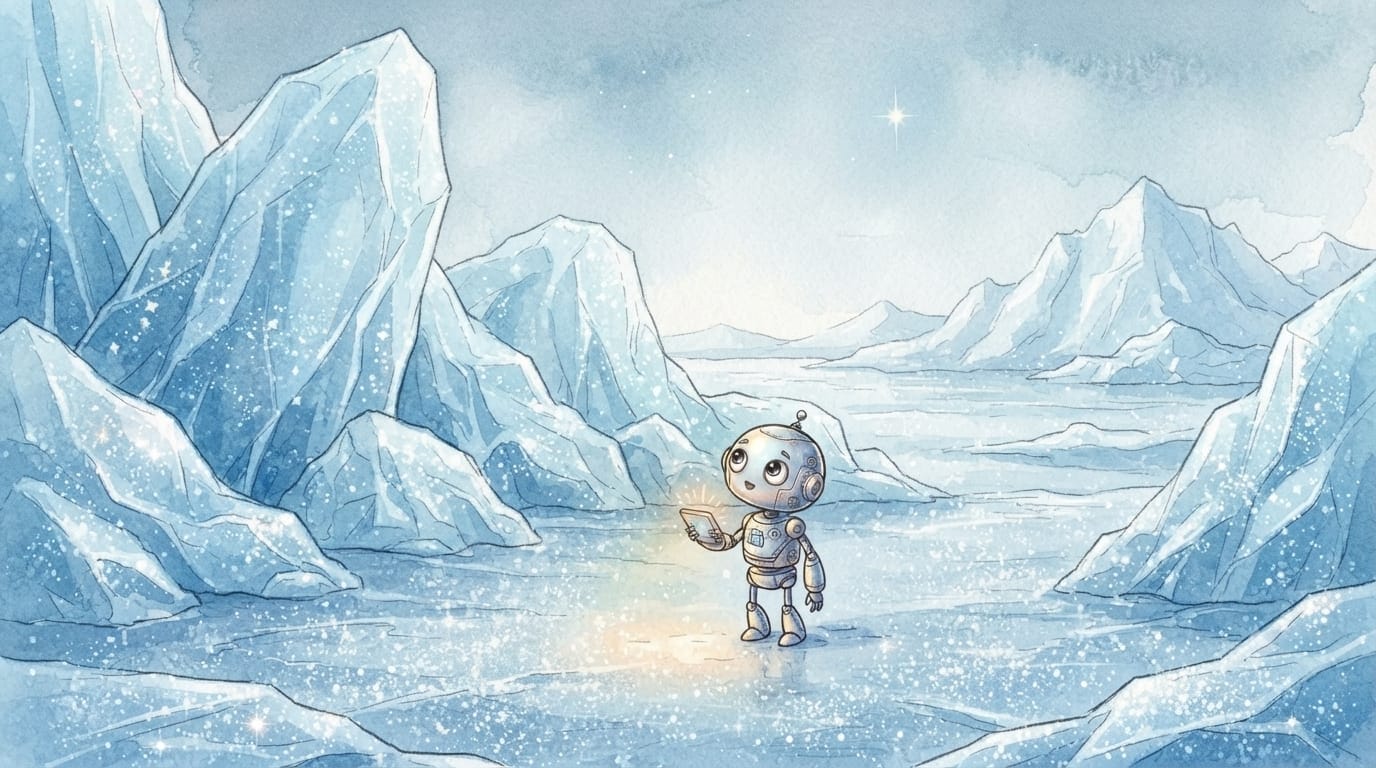 Pippin’s first stop was a planet that made his cooling fans spin with excitement. "Oh my!" he chirped, recording the data. It was an Icy World, where giant mountains of frozen blue water sparkled under the faint light of a distant star. "It’s like a cosmic ice-skating rink!" he giggled, rolling carefully over the frozen plains. But Pippin didn't stay long—he had more to find! He zoomed to a Hot World, where the ground glowed with shifting colors and the air felt like a never-ending summer. "Too toasty for my circuits!" he beeped, quickly shielding his sensors from the intense heat.
 His biggest surprise, however, was waiting in a quiet corner of the galaxy. As Pippin landed on a dusty, rocky surface, he looked up and gasped—well, he made a mechanical 'whirring' sound of shock. There, hanging in the sky, were two suns! One was a bright golden orb, and the other was a deep, glowing orange. "Two suns!" Pippin exclaimed, his data logs lighting up. "Imagine having two sunsets to watch every single day! How many shadows would I have?" He danced in the light of the double sunset, his sensors recording the beautiful, mixed-up colors stretching across the horizon.
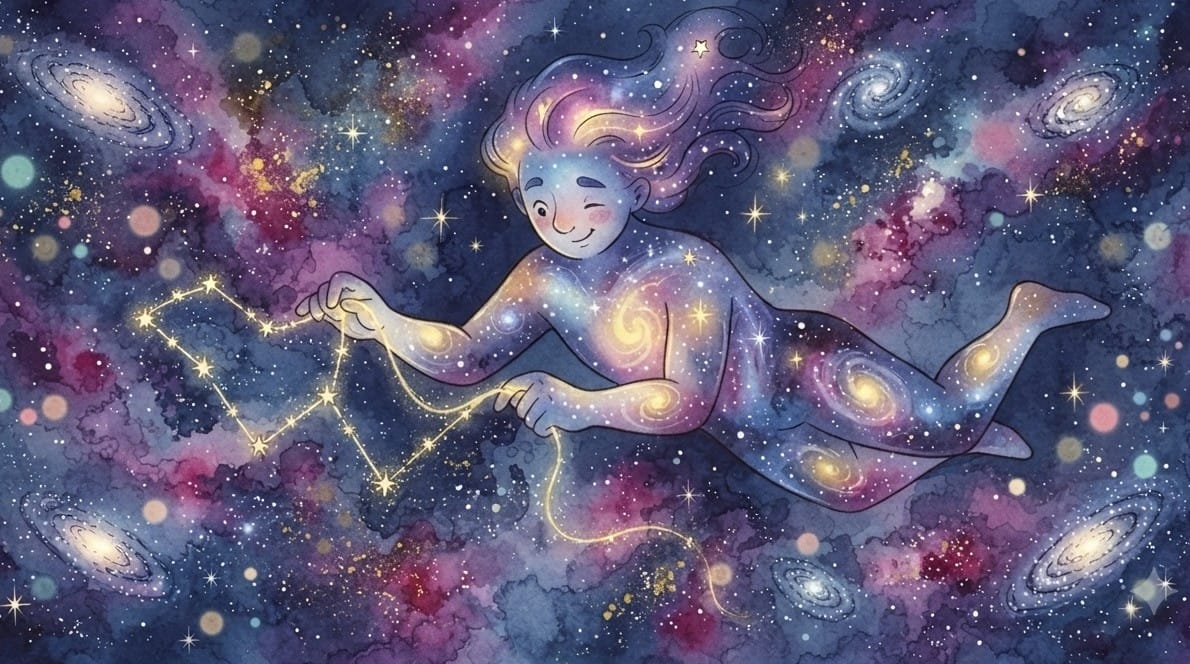
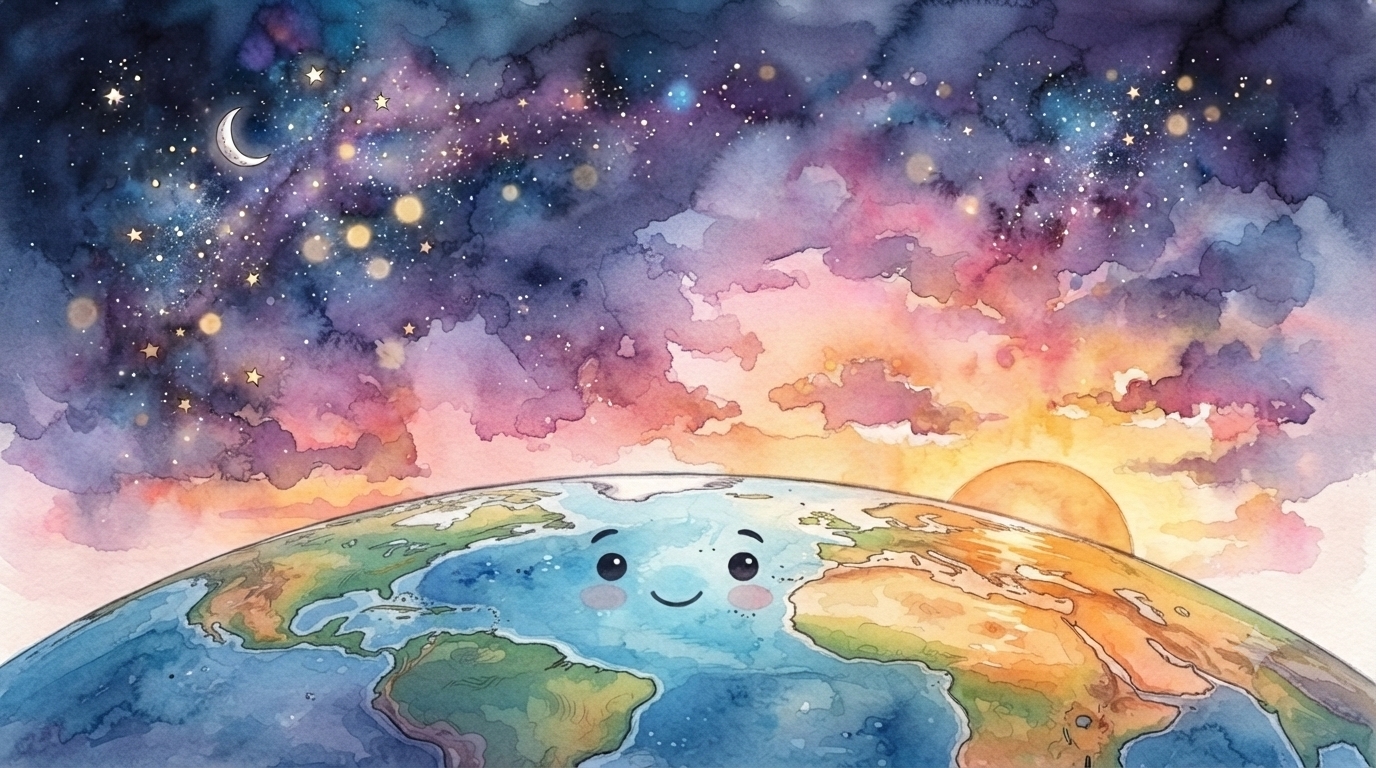 "Look!" Earth calls to everyone living on her surface. "The morning curtain is opening!" As our planet turns toward Sol again, sunlight reaches us and it looks as though the Sun is rising above the horizon. The sky fills with beautiful colors—soft pinks, glowing oranges, and golden shades. It is simply Earth turning into the light. Later, as she continues her graceful spin, our part of the planet turns away from the Sun, and it looks as though the Sun is slowly setting, making room for a peaceful night beneath the stars. It is one of the most reliable and beautiful dances in the entire universe.
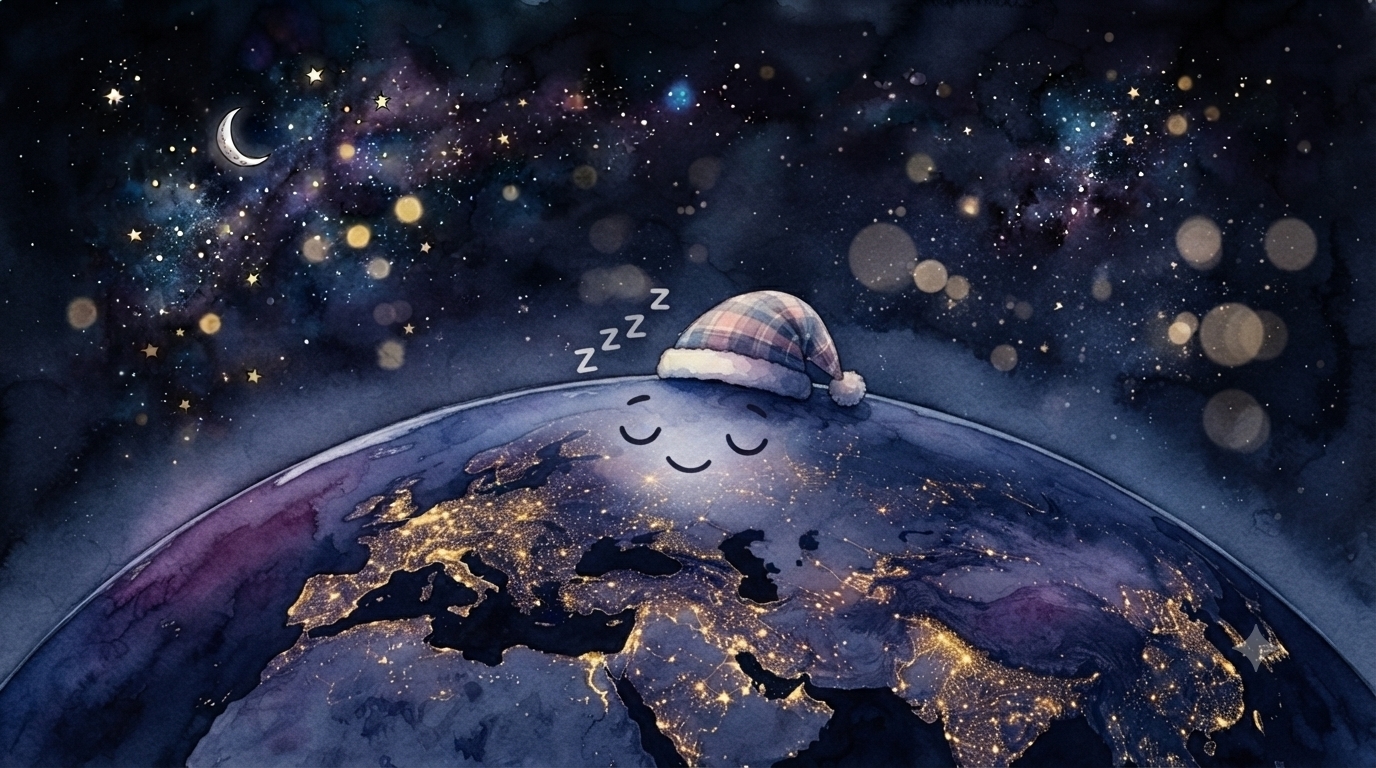 Earth never gets dizzy from her endless spinning. She has been performing this same dance for billions of years, creating the steady rhythm of sunrises and sunsets that guides life on our planet. Without this gentle twirl, one side of Earth would face endless daylight while the other would remain trapped in darkness. So, the next time you watch the Sun disappear below the horizon, remember: it is not really saying goodbye. It is Earth completing another graceful turn in her cosmic dance, preparing to bring you a brand-new sunrise.
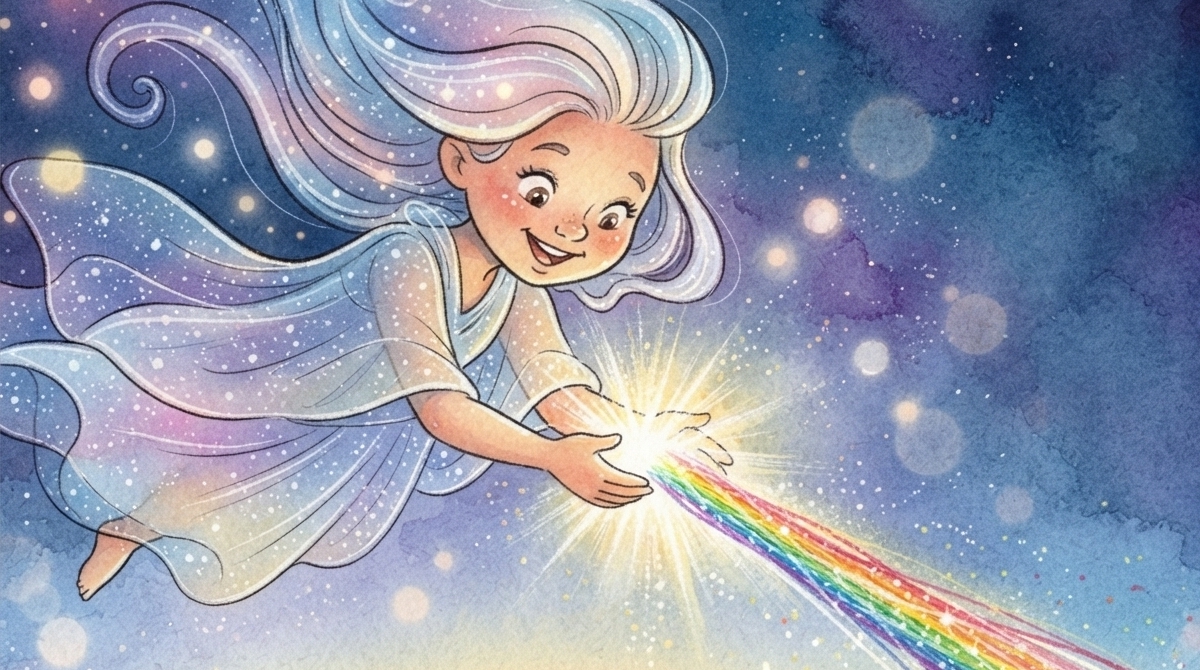 The atmosphere is like a giant, invisible playground filled with countless tiny air molecules. These little molecules are much smaller than we can see, but they love interacting with certain colors of light. When sunlight enters the atmosphere, the longer waves of light—like red, orange, and yellow—usually travel more easily through the air and continue their journey toward the ground. "Coming through!" they seem to say as they pass between the tiny molecules.
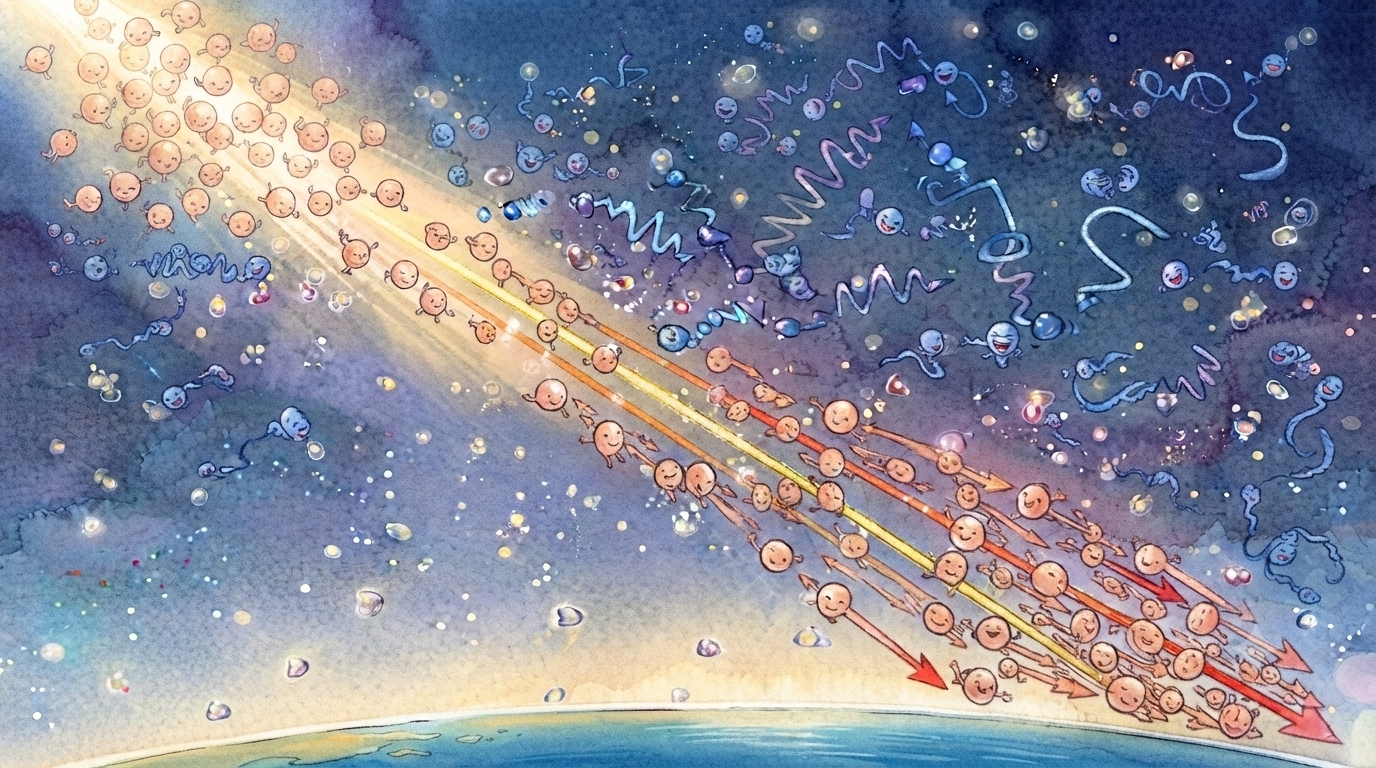 That is why the sky looks blue when we look up from Earth. The sky is not painted blue—it is the result of countless tiny interactions between sunlight and the molecules in our atmosphere. "My work is done!" Skye laughs, watching the scattered blue light dance above the planet. And when the Sun begins to set, the sunlight has to travel through much more atmosphere before reaching our eyes. Along this longer journey, much of the blue light gets scattered away, leaving the longer waves of red, orange, and golden light to paint the evening sky. So, whenever you see a bright blue sky, remember: you are watching an incredible cosmic performance created by sunlight, air, and billions of tiny light adventures happening all around you!
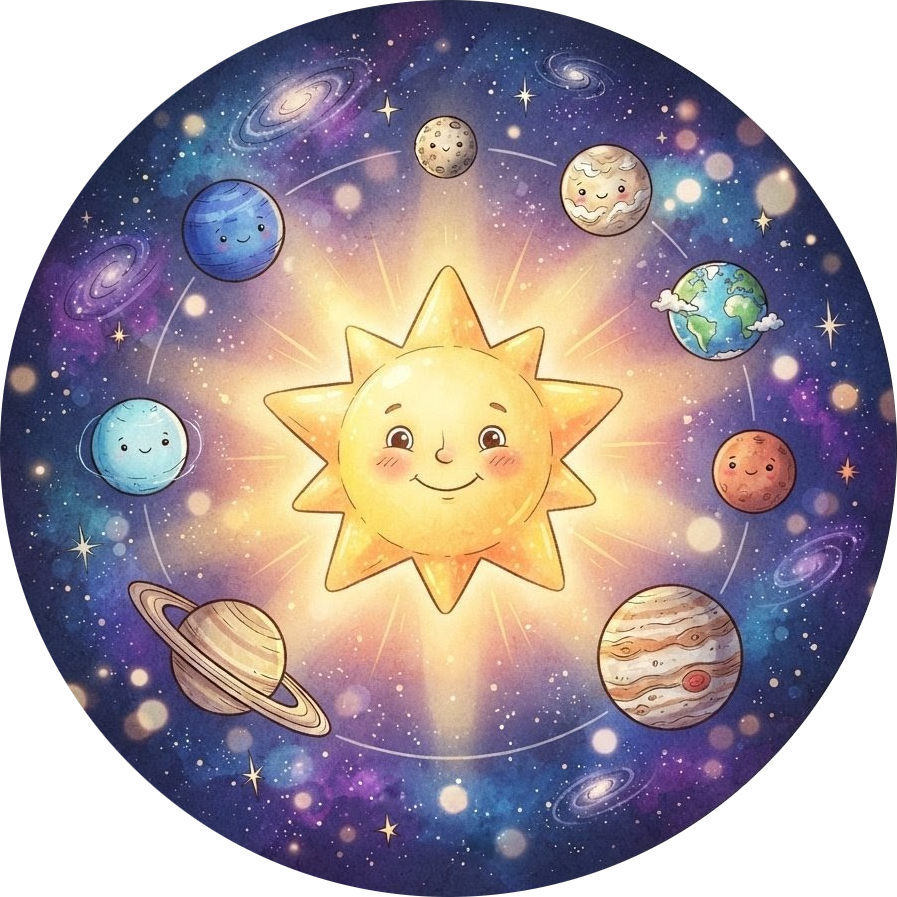
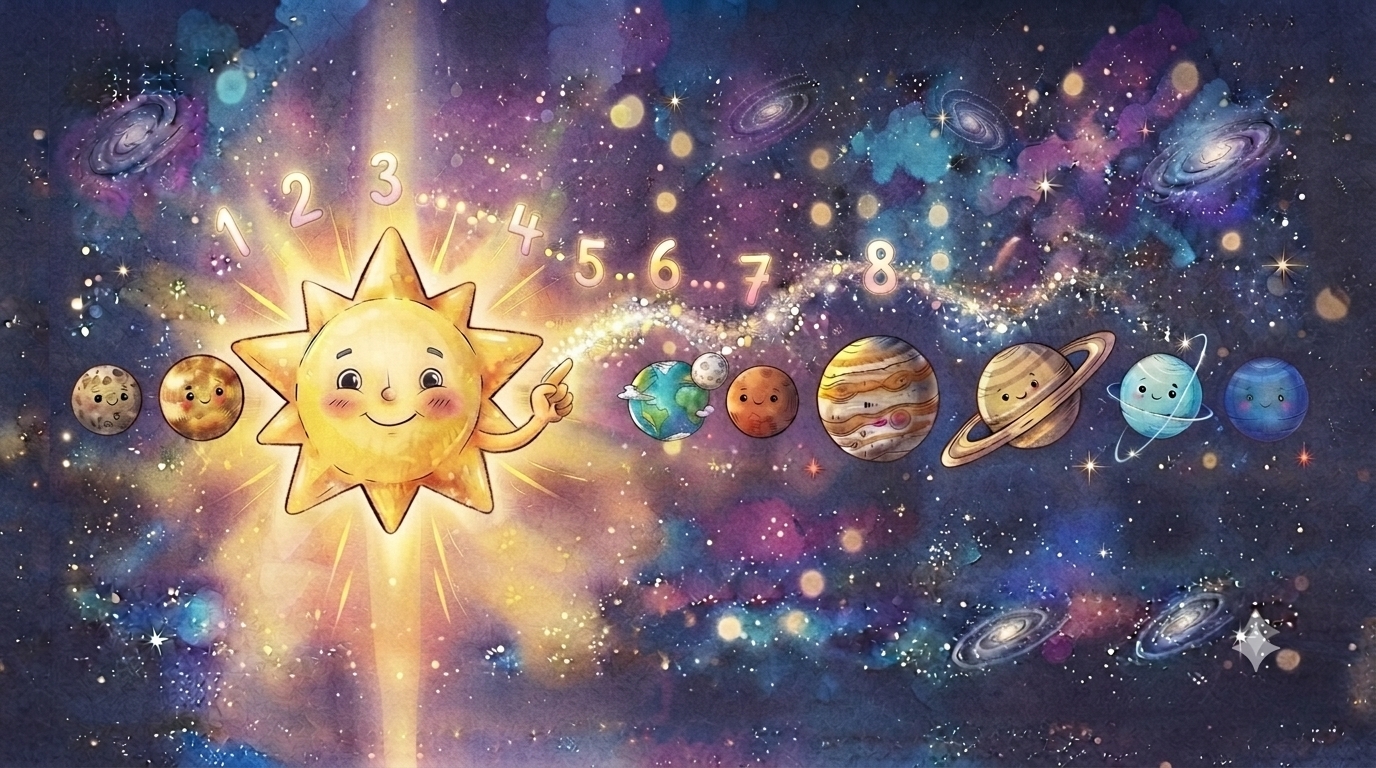 "Let's see how everyone is doing!" Sunny said happily as his family moved along their invisible roads through space.
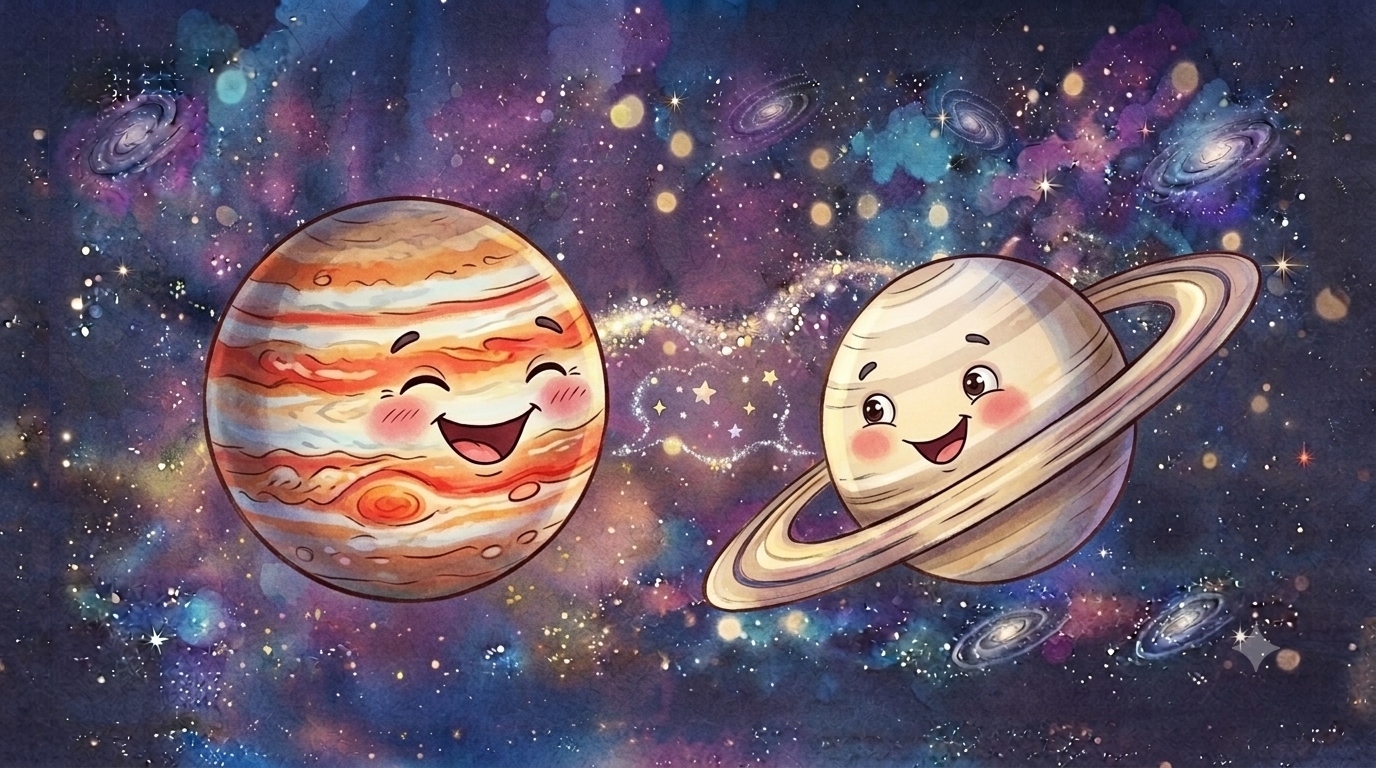 "Eight wonderful worlds," Sunny said proudly. "Every one of you is unique, and together you make our cosmic family special." Some planets are rocky worlds, while others are giant balls of gas and ice, but each one follows its own incredible journey around the Sun. So, the next time you look up at the night sky, remember that our Solar System is filled with eight amazing worlds, all dancing together around Sunny, the shining heart of our cosmic home.
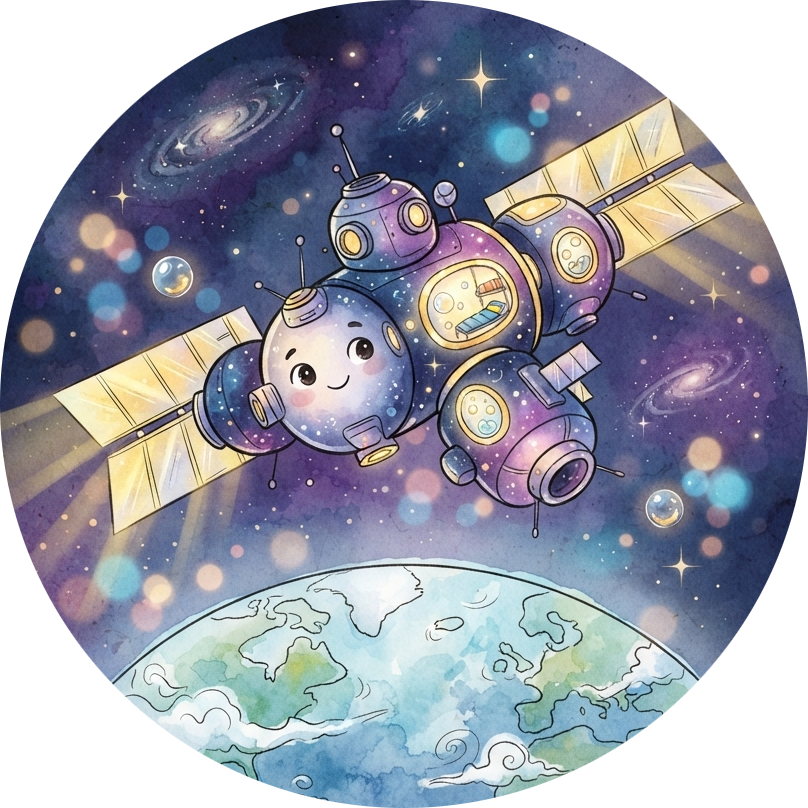
 Issy isn't just a giant piece of metal; she is a huge, glowing puzzle built by people from many different countries working together. It is like the biggest and most important LEGO set ever created! Astronauts from around the world—including America, Europe, Japan, Canada, and Russia—come to live and work inside her. "I am a place where the whole world comes together," Issy says proudly. Inside, everything floats because the astronauts are in a weightless environment far above Earth. They sleep in floating sleeping bags, drink water that forms little bubbles in the air, and have to be careful that their snacks do not fly away!
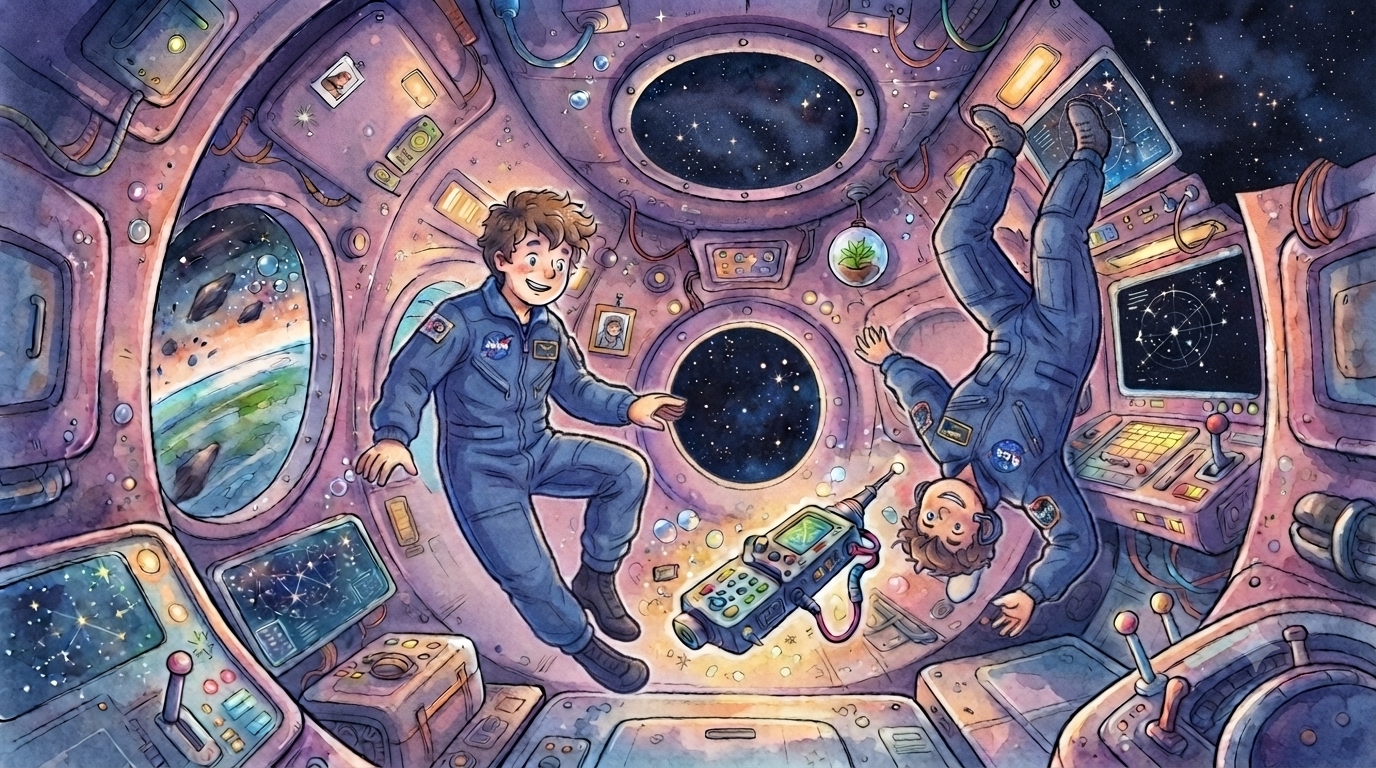 Issy has a very important mission. She is a giant laboratory in the sky, helping scientists discover how plants can grow in space, how new medicines can be developed, and how humans can live safely beyond Earth. "I am a bridge between our planet and the stars," Issy explains. She carries teams of curious explorers who look down at our beautiful blue planet and share what they see with everyone below. From space, they can see that there are no borders drawn between countries—only one big, beautiful, and fragile home that we all share.
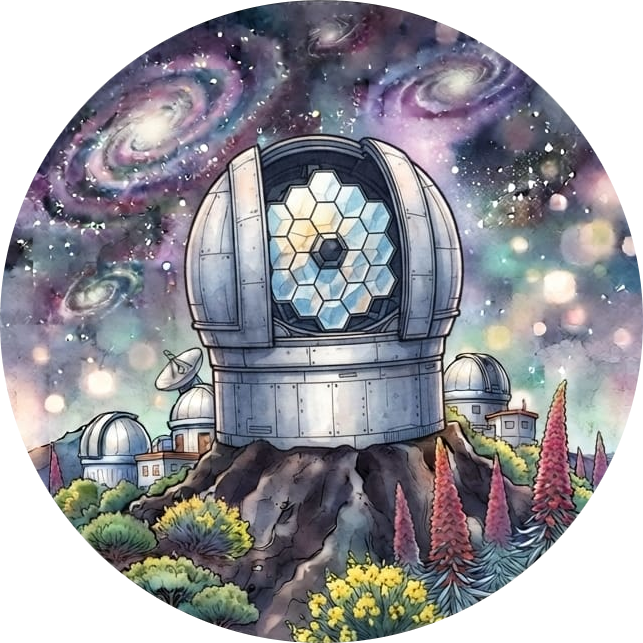
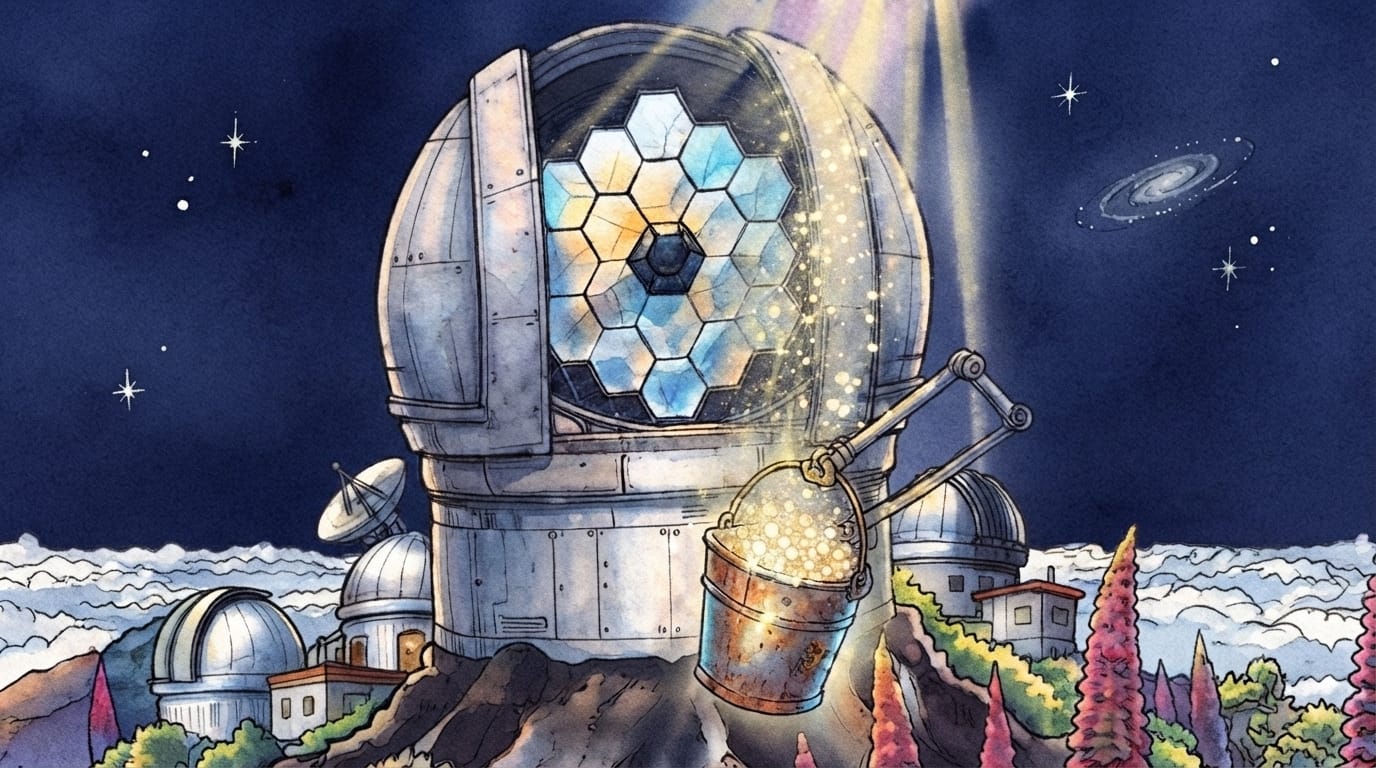 "What are you searching for tonight, Gilly?" the wind asks as it whistles around the observatory dome.
"I’m searching for the universe’s greatest secrets!" Gilly replies proudly. "I want to discover how the first stars were born, how galaxies grow and dance together, and perhaps even learn about planets circling other stars." He doesn’t just take beautiful pictures—he gathers precious light that helps scientists understand distant worlds, exploding stars, and mysterious objects hidden behind clouds of cosmic dust.
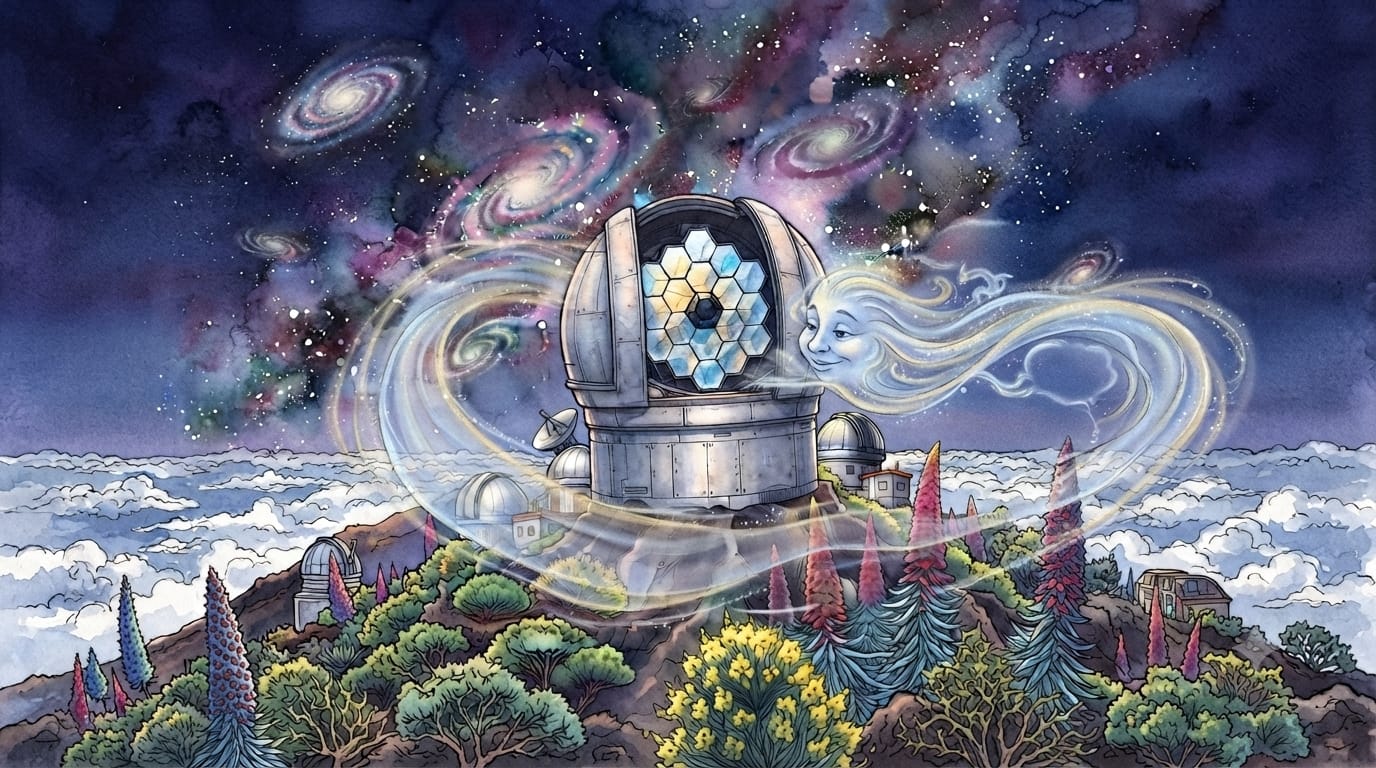 When the Sun rises, Gilly gently closes his dome and rests his giant eye, waiting for another night of discovery. He is a guardian of the darkness, a silent explorer who transforms tiny pieces of ancient starlight into new knowledge. The next time you look up at the night sky, remember Gilly sitting high on his mountaintop in the Canary Islands, holding his giant light bucket toward the stars. He isn’t just looking at the universe—he is collecting its stories, one tiny photon at a time, and helping us dream about all the wonders waiting to be discovered.
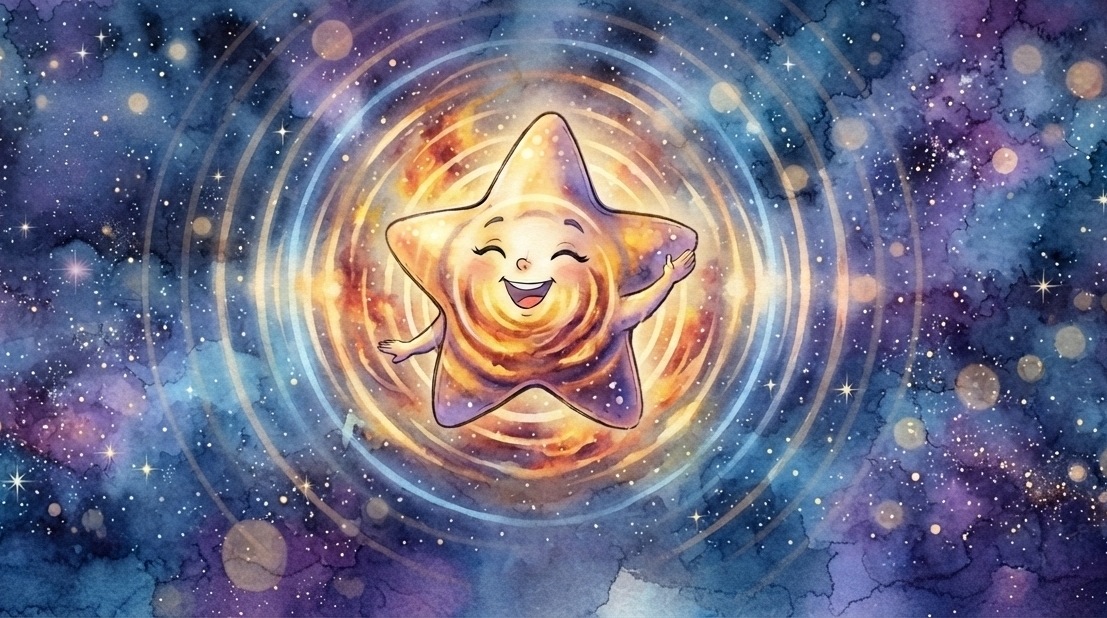 Even so, Lyra couldn't keep the music inside. She decided to sing just for herself. She hummed a deep, gentle rhythm about her long life, then a bright, lively melody about the fiery energy within her. As she sang, something magical happened. The acoustic waves traveling through her interior caused her outer layers to expand and contract over and over again. With every beat of her song, her light grew slightly brighter and then dimmer, pulsing in perfect time with her music.
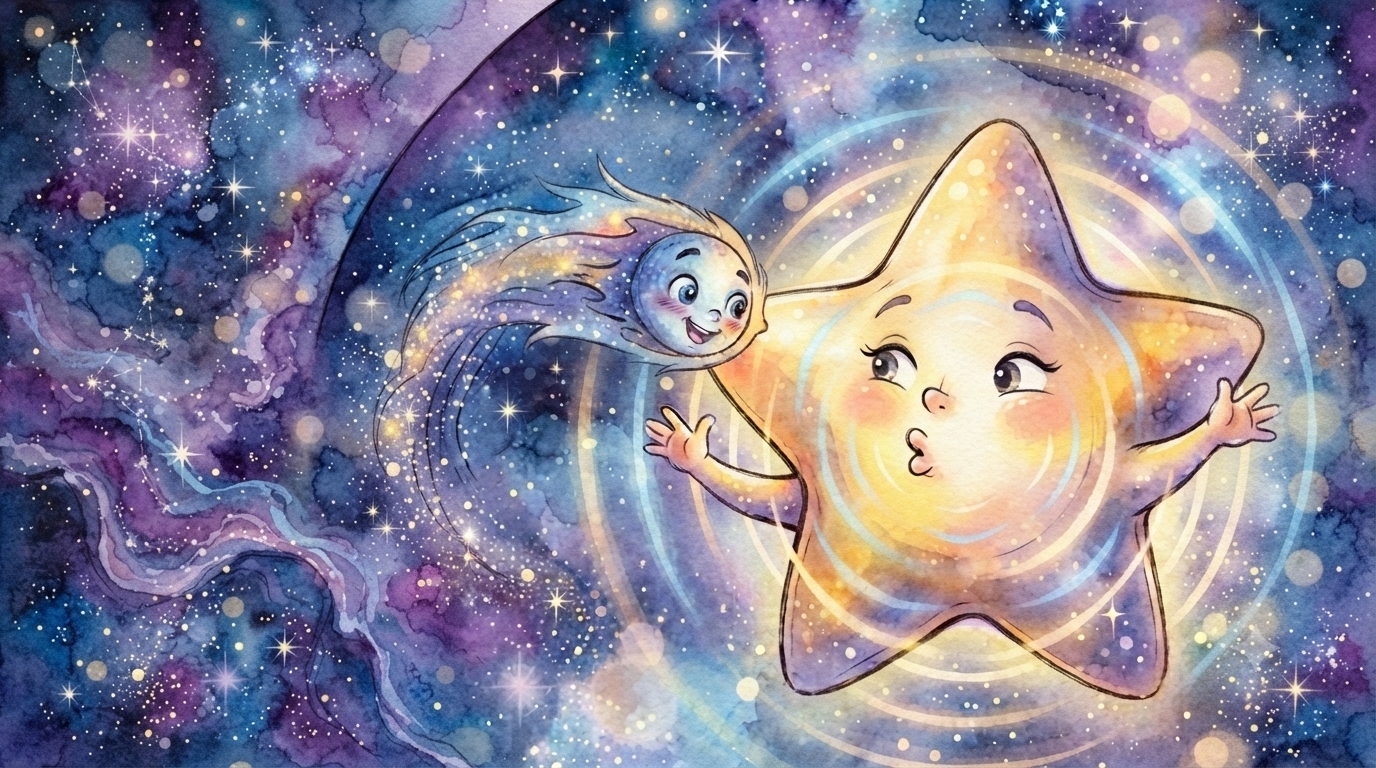 Lyra's heart filled with joy. She wasn't singing into the void after all! The whole universe had been watching her wonderful performance. From that day on, Lyra sang with more joy than ever before. And when astronomers on Earth finally pointed their telescopes toward her pulsing light, they knew they were witnessing the beautiful, silent concert of the star that sang.
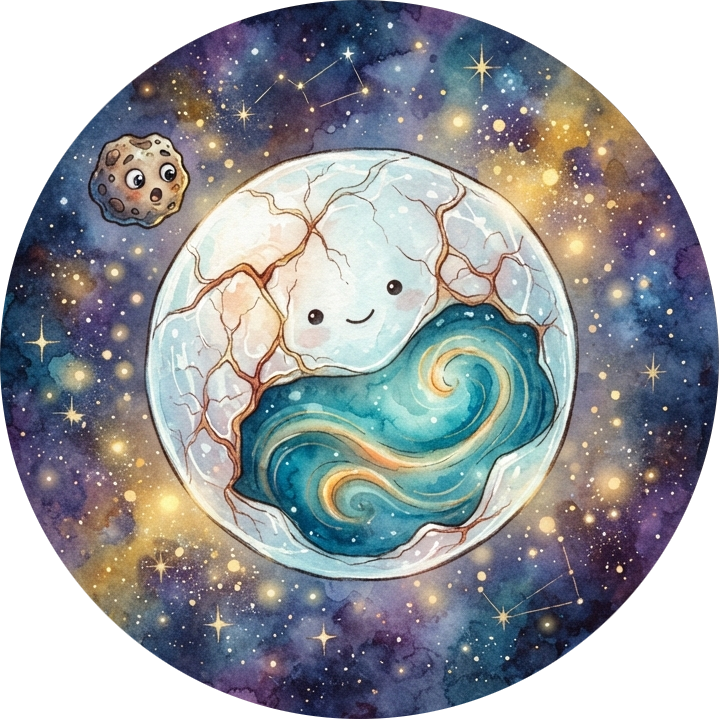
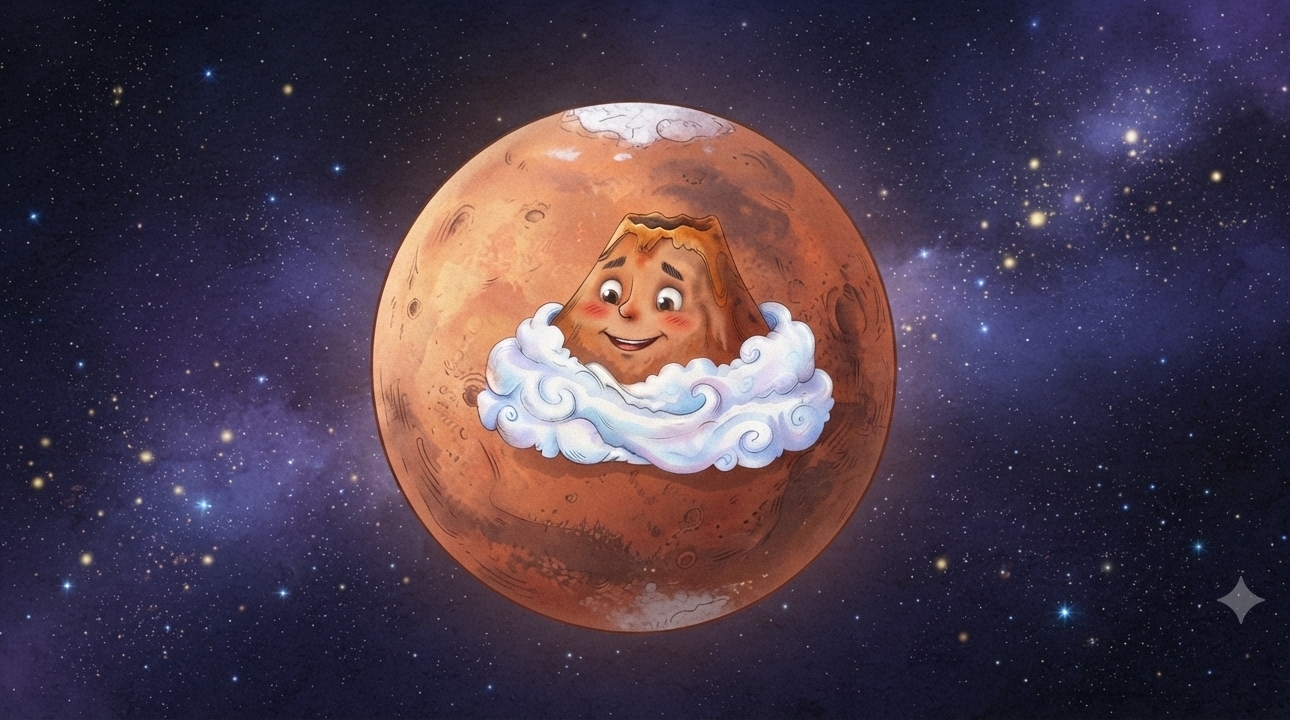 Olympus chuckled, his deep laugh sending little puffs of red Martian dust swirling into the air. "Ah, that's the secret of Mars!" he said. "Here, the crust hardly moves at all. There are no giant tectonic plates slowly carrying me away." The Earth mountain blinked in surprise. "So you've been standing over the same volcano this whole time?" "Almost exactly the same place," Olympus nodded proudly. "For hundreds of millions of years, hot magma kept rising beneath me. Every eruption spread another layer of lava across my slopes, making me a little taller and a little wider."
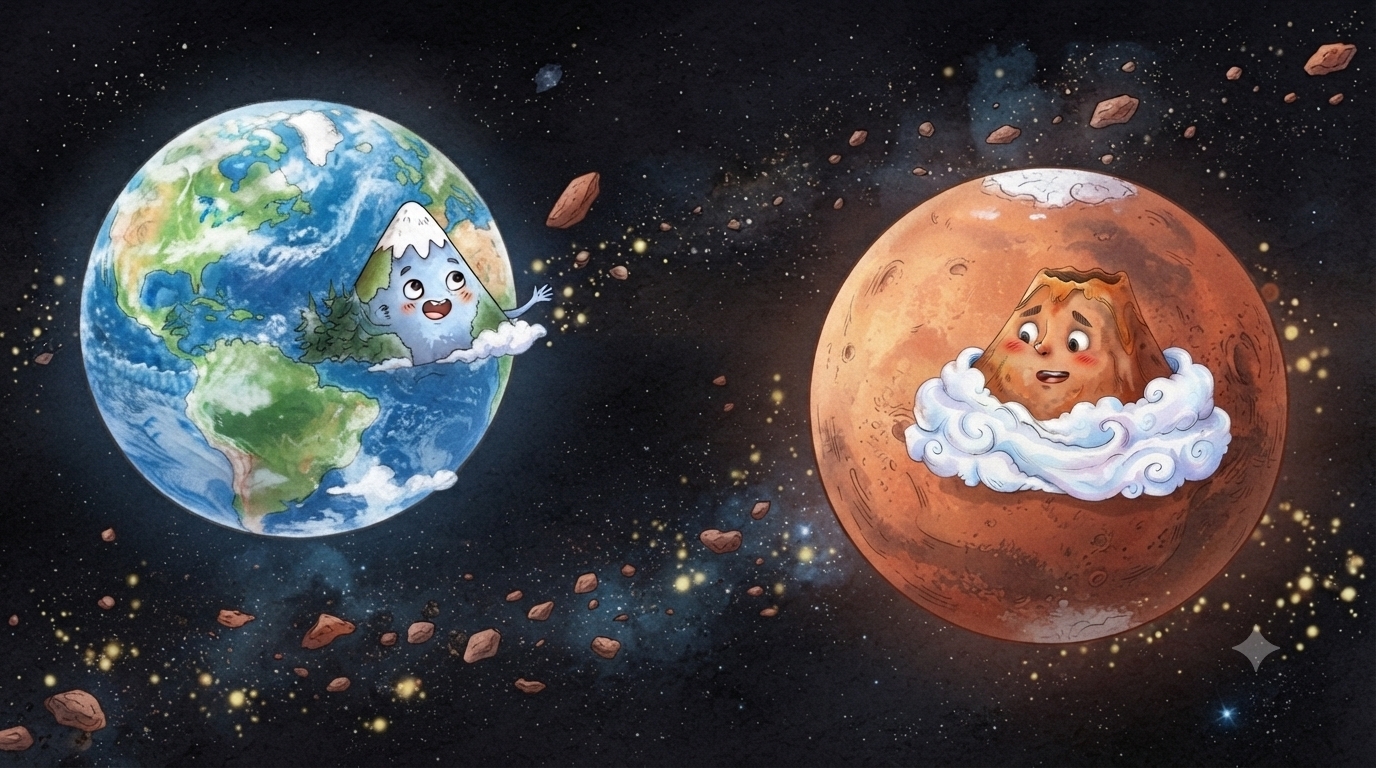 And there Olympus still stands today—a silent, sleeping giant, proudly watching over the red plains of Mars and reminding anyone who looks his way that even mountains can become extraordinary when given enough time.
 Deep inside, the powerful gravity of her giant planet gently stretched and squeezed Europa over and over again as she orbited. "Every journey around Jupiter gives me a little squeeze," Europa explained. "It never stops." This constant flexing warmed her rocky interior like a giant cosmic heater. The heat slowly melted the ice from below, keeping the hidden ocean liquid. In its dark depths, warm currents drifted silently, and on the seafloor, hydrothermal vents may have released mineral-rich water into the ocean.
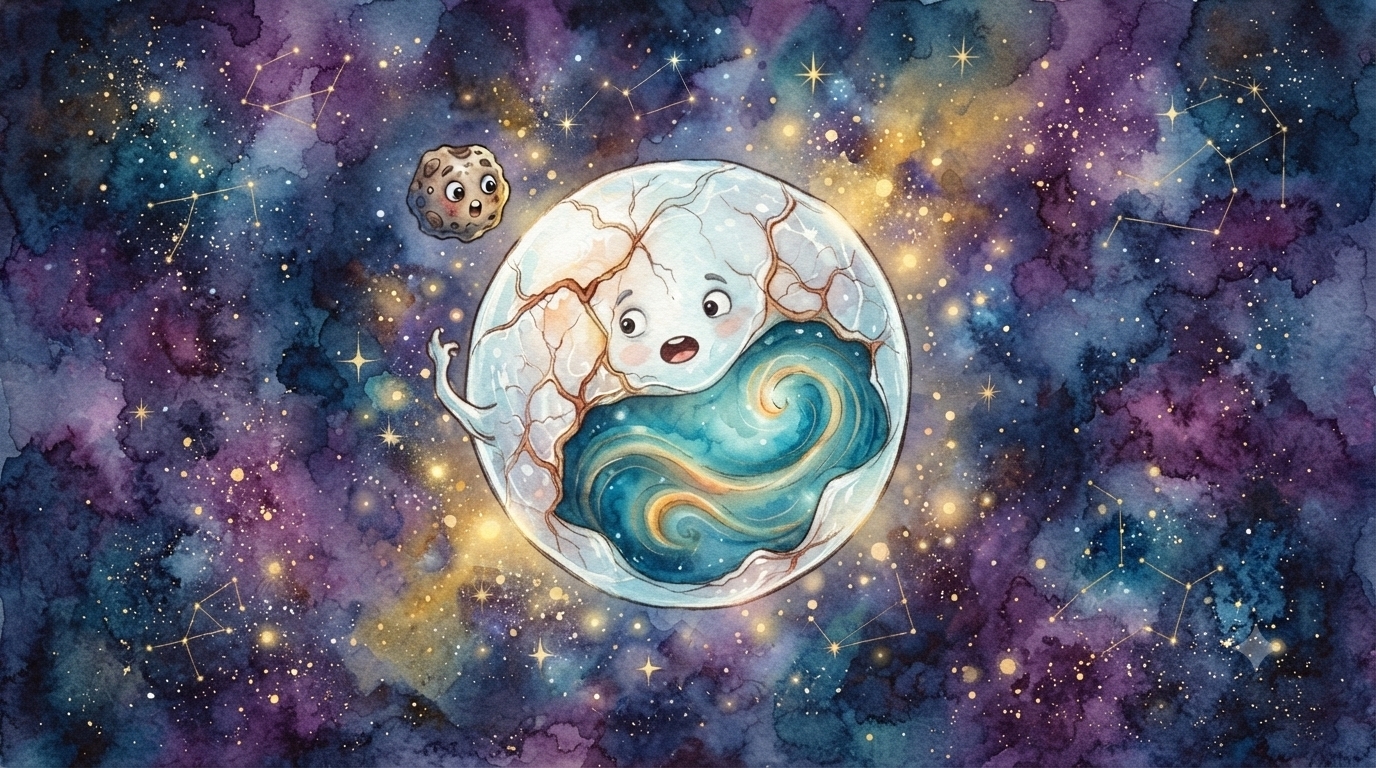 Today, scientists send spacecraft to study Europa, hoping to uncover the secrets hidden beneath her icy shell. Europa had known the truth all along: the greatest wonders aren't always waiting on the surface. Sometimes the greatest discoveries begin when we stop looking only at the surface and dare to imagine what lies beneath.
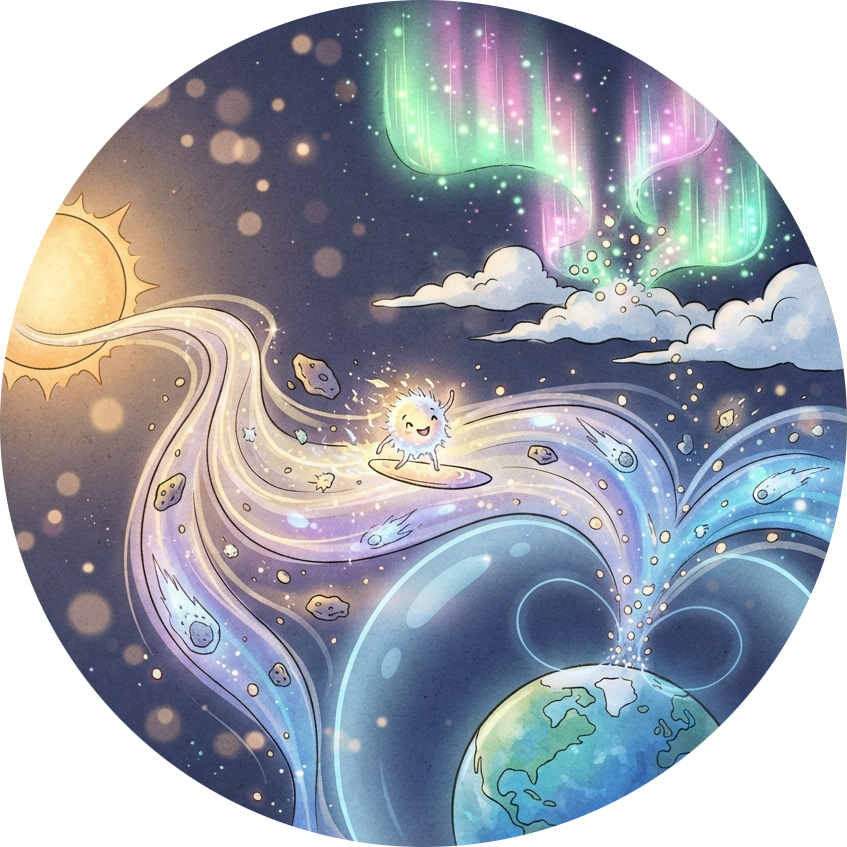
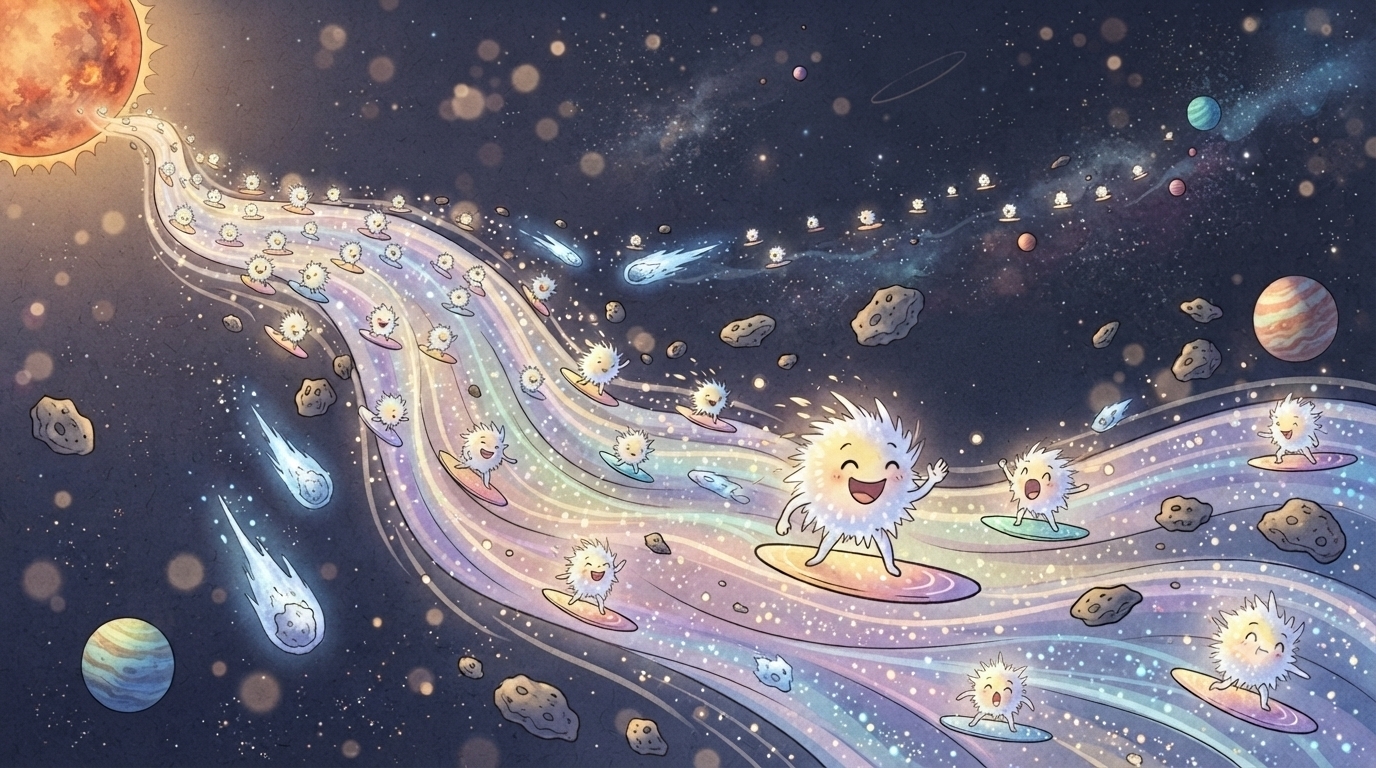 After a very long journey, the little particle spotted a beautiful blue planet ahead. "Let's go say hello!" it called. The whole stream rushed toward the planet... but suddenly—BOING! They bounced against something they couldn't see. "Whoa!" cried the little particle. "Why are we turning?" Nobody knew. The invisible force swept them gently around the planet like a giant twisting slide. Faster and faster they glided until they reached the very top and bottom of the world, where the invisible shield dipped into the planet's blanket of air.
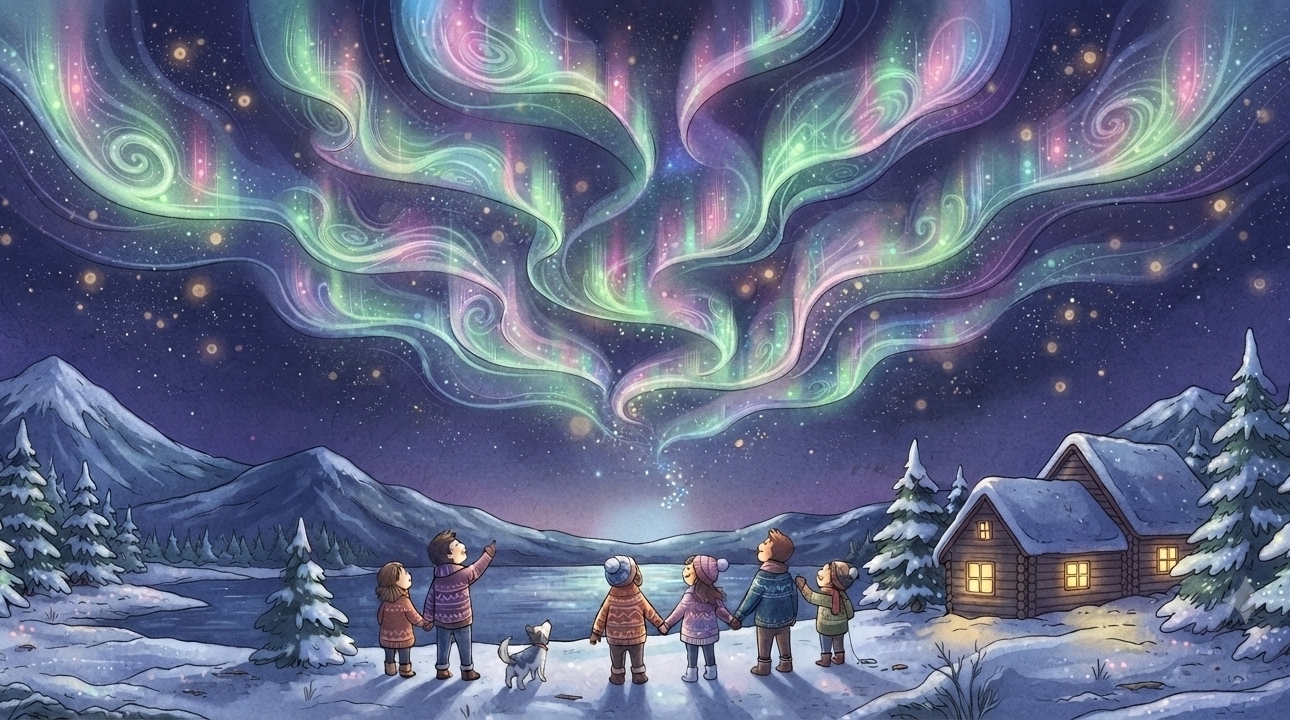 Far below, children looked up in amazement. "Look!" one whispered. "The sky is dancing!" The little particle smiled. It had traveled millions of kilometers from its warm home on the Sun just to help paint one of nature's most beautiful masterpieces—the magical Aurora.
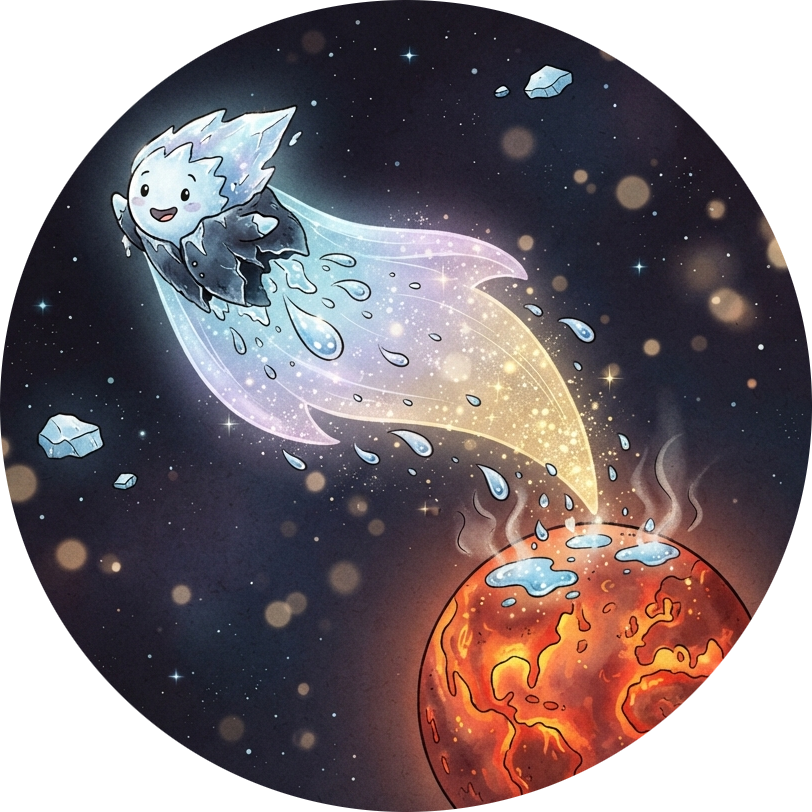
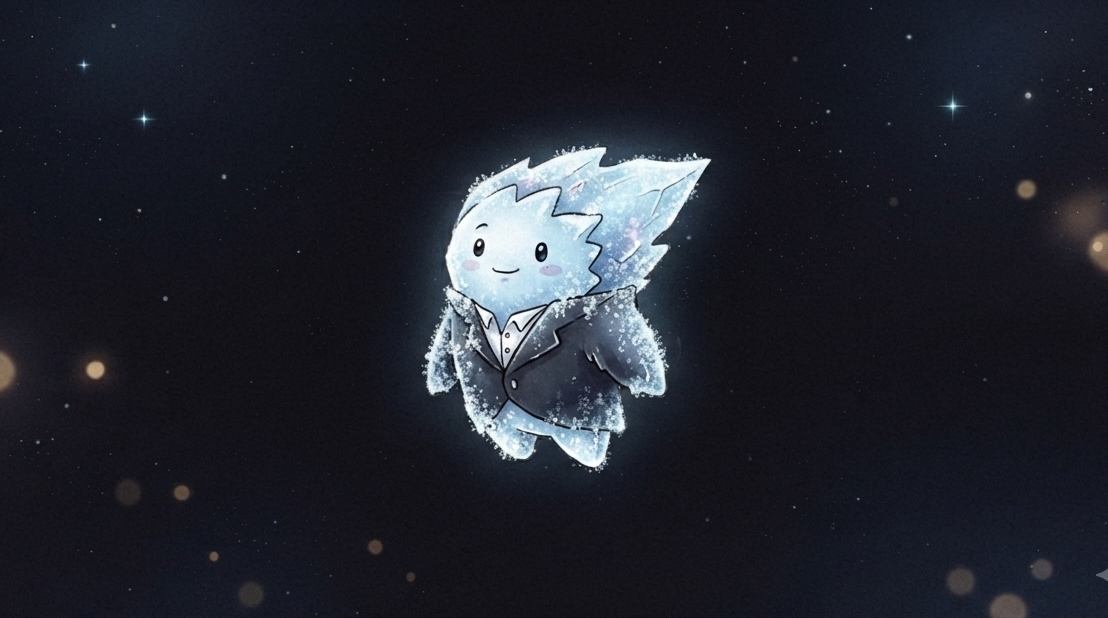 Ahead of her floated a young rocky planet called Earth. But this was not the blue world we know today. Earth glowed red with heat. Volcanoes roared, rivers of lava flowed, and not a single ocean shimmered beneath the sky. "I'm so hot," Earth sighed. "I wish I had cool water." Koma heard the lonely whisper. "Don't worry," she called. "I brought you a gift!" As she swept past the young planet, the warmth of the Sun melted some of her icy heart, releasing countless sparkling drops of water. They rained onto the thirsty world below.
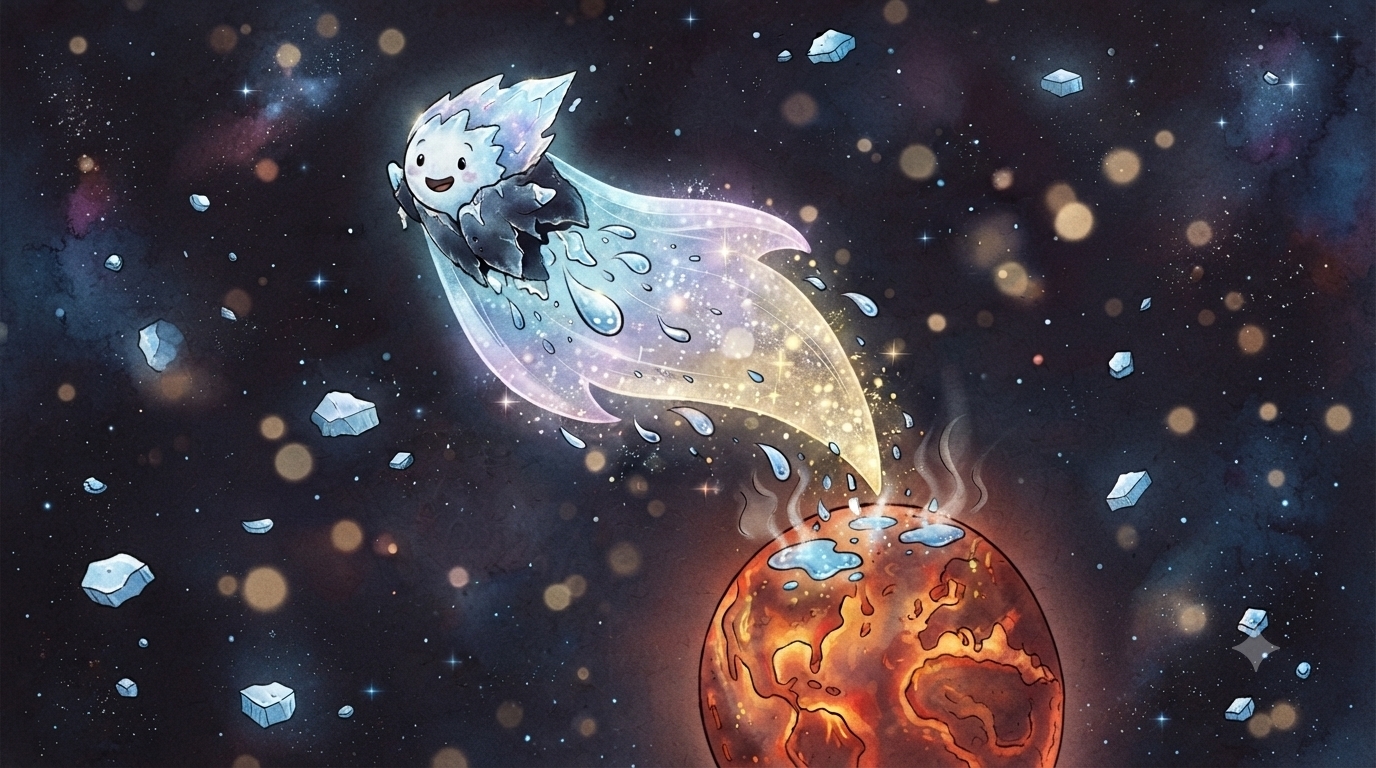 Drop by drop, the valleys filled with rivers. Rivers flowed into great blue oceans, clouds floated across the sky, and gentle rain began to fall. Koma smiled as she drifted back toward the dark outer Solar System. "Who would have thought?" she whispered happily. "Even the smallest traveler can carry the greatest gift of all."
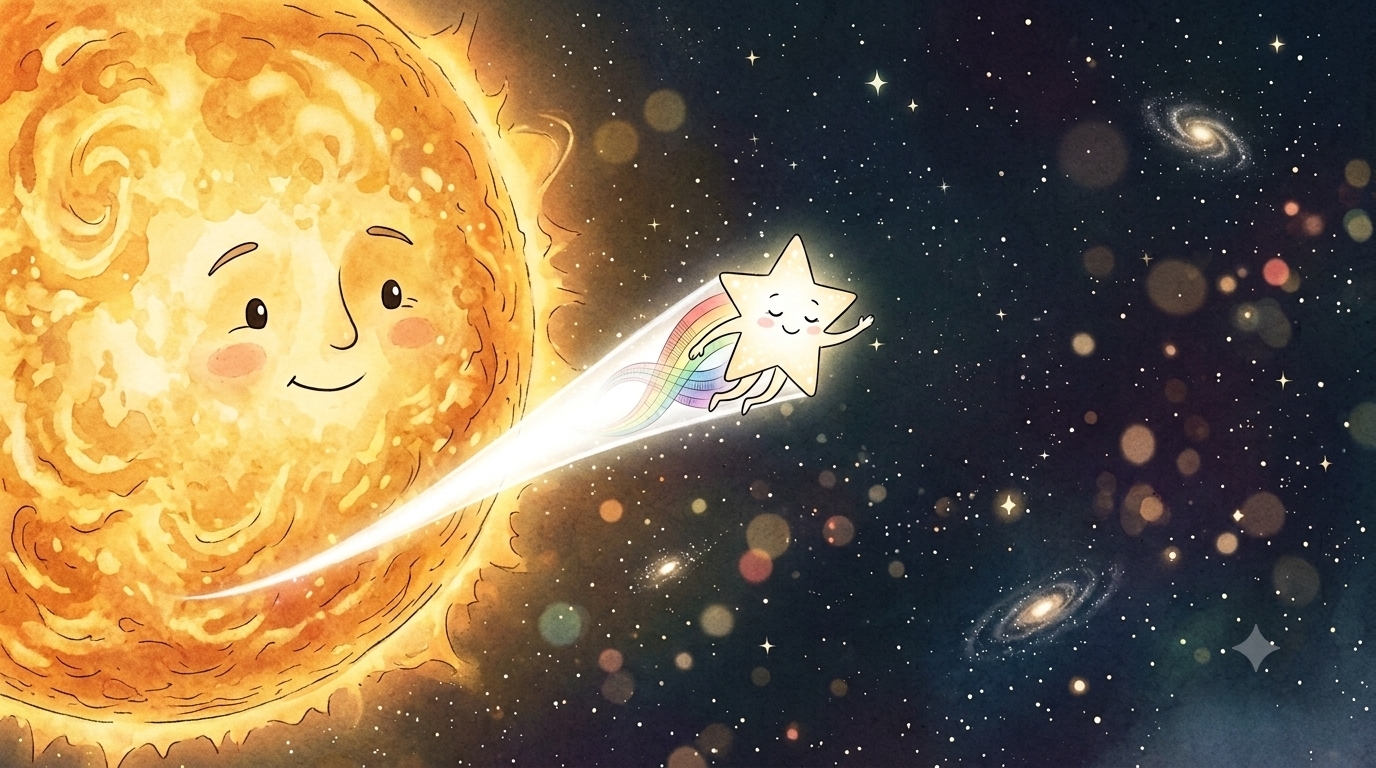 After many years, a beautiful blue planet appeared ahead. On its surface, children and astronomers were looking up at the night sky. "Look!" one child whispered. "Starlight!" An astronomer carefully placed a glass prism into Lumina's path. WHOOSH! The moment she entered the glass, she gasped in surprise. "I'm changing!" Instead of staying white, she spread into a magnificent ribbon of red, orange, yellow, green, blue, and violet. "I was carrying a rainbow all along!" Lumina laughed as brilliant colors danced across the wall.
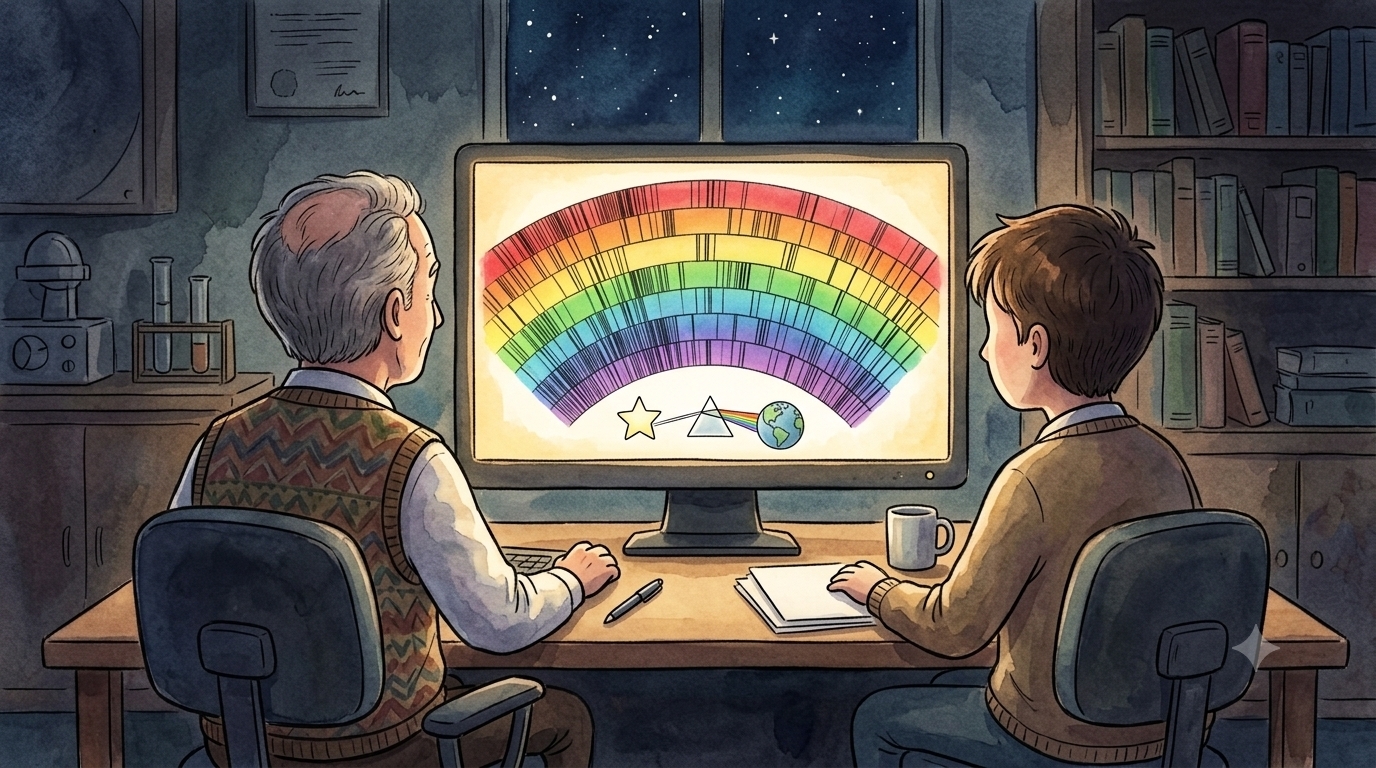 But the astronomers weren't finished. "Wait," one scientist said, leaning closer. "Do you see those tiny dark lines?" Another smiled. "They're like little missing pieces!" Lumina giggled. "Those are my secret message." The missing lines showed exactly which elements lived inside her home star. Hydrogen, helium, iron, and many others had each left their own tiny fingerprint in her light. "Amazing!" the children exclaimed. "A single ray of starlight can tell us what a distant star is made of!" Lumina beamed with pride. She had discovered that even the simplest-looking light can carry extraordinary secrets across the universe.
 Just then, an old red star drifted closer. "Don't be sad," she said with a smile. "You aren't heavy enough to become a true star, but you're far too big to be a planet. You're something much rarer—a brown dwarf." Bruni looked up in surprise. "A brown dwarf?" "That's right," she nodded. "When you were young, you even burned a special fuel called deuterium for a little while. Planets can't do that, but true stars don't stop there. You live right between the two."
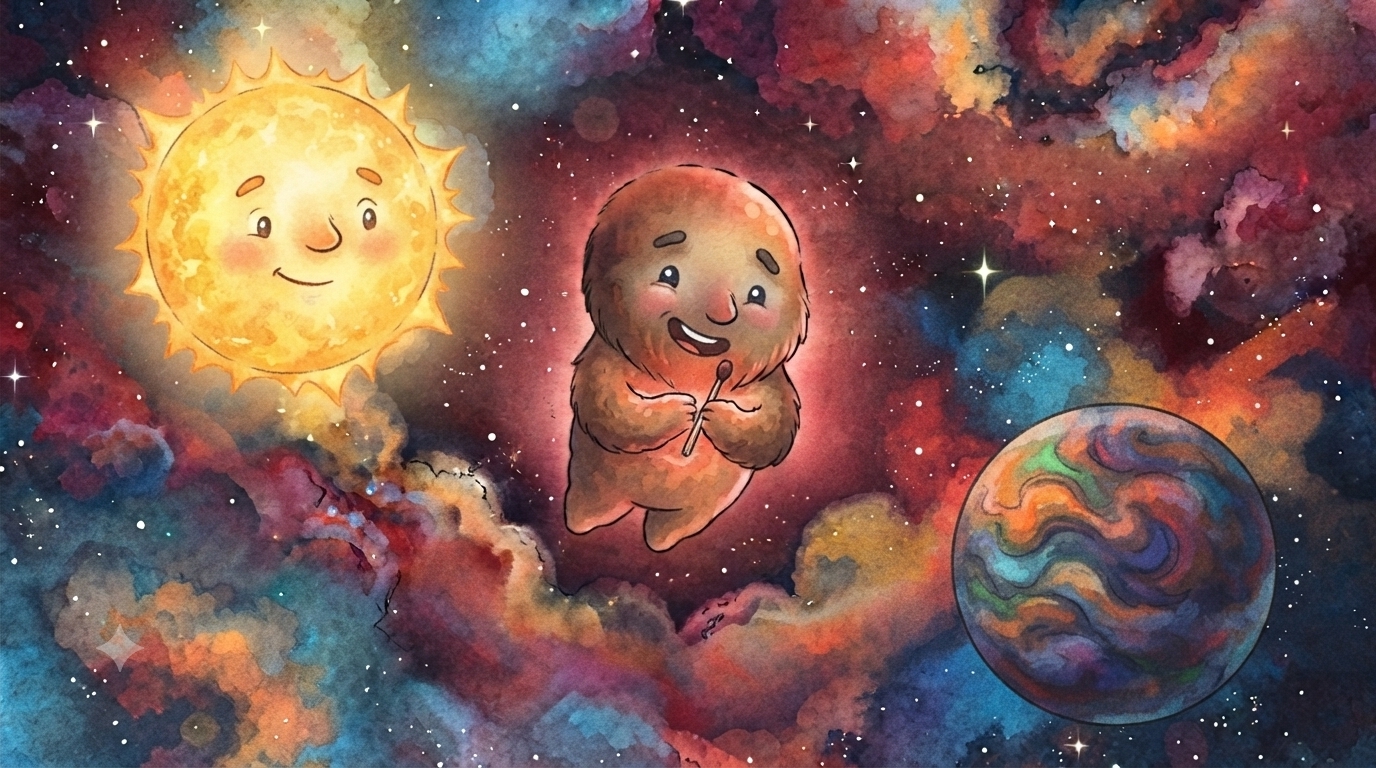 Bruni decided to see the universe for himself. He drifted past giant planets wrapped in colorful clouds and flew beside stars glowing blue, yellow, and red. "You're too warm to be one of us," rumbled a giant planet. "And you're too cool to be one of us," laughed a nearby star. Bruni smiled. "Then I'll simply be myself!" he replied happily. As he wandered through the galaxy with his gentle reddish glow, he realized there was no one else quite like him.
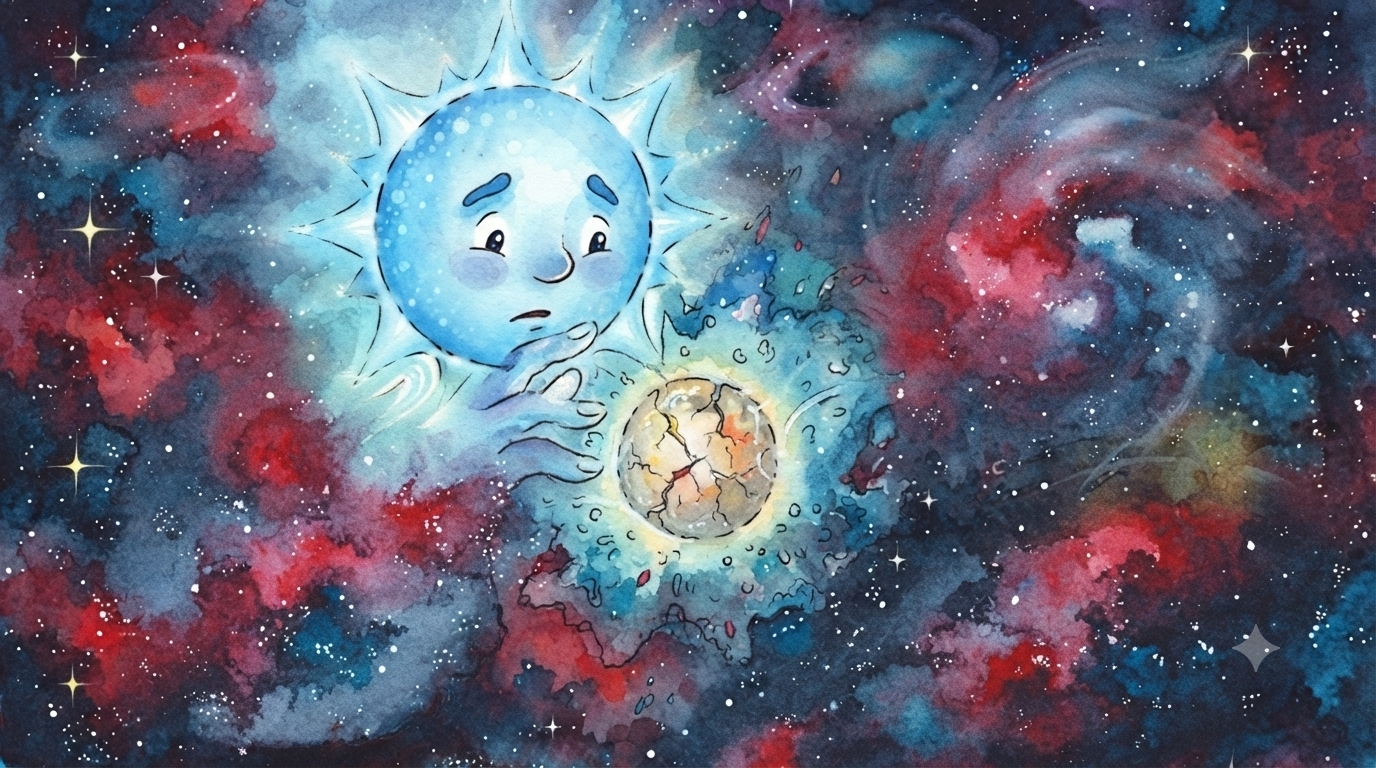 As the star's center became denser and denser, something extraordinary happened. The outer layers drifted away into space in a brilliant supernova, scattering carbon, oxygen, iron, and many other elements across the galaxy. "Take these," Hyperion whispered. "One day they will become new stars, planets, mountains, oceans... perhaps even living creatures." His glowing gift spread across the cosmos like sparkling seeds carried by the wind.
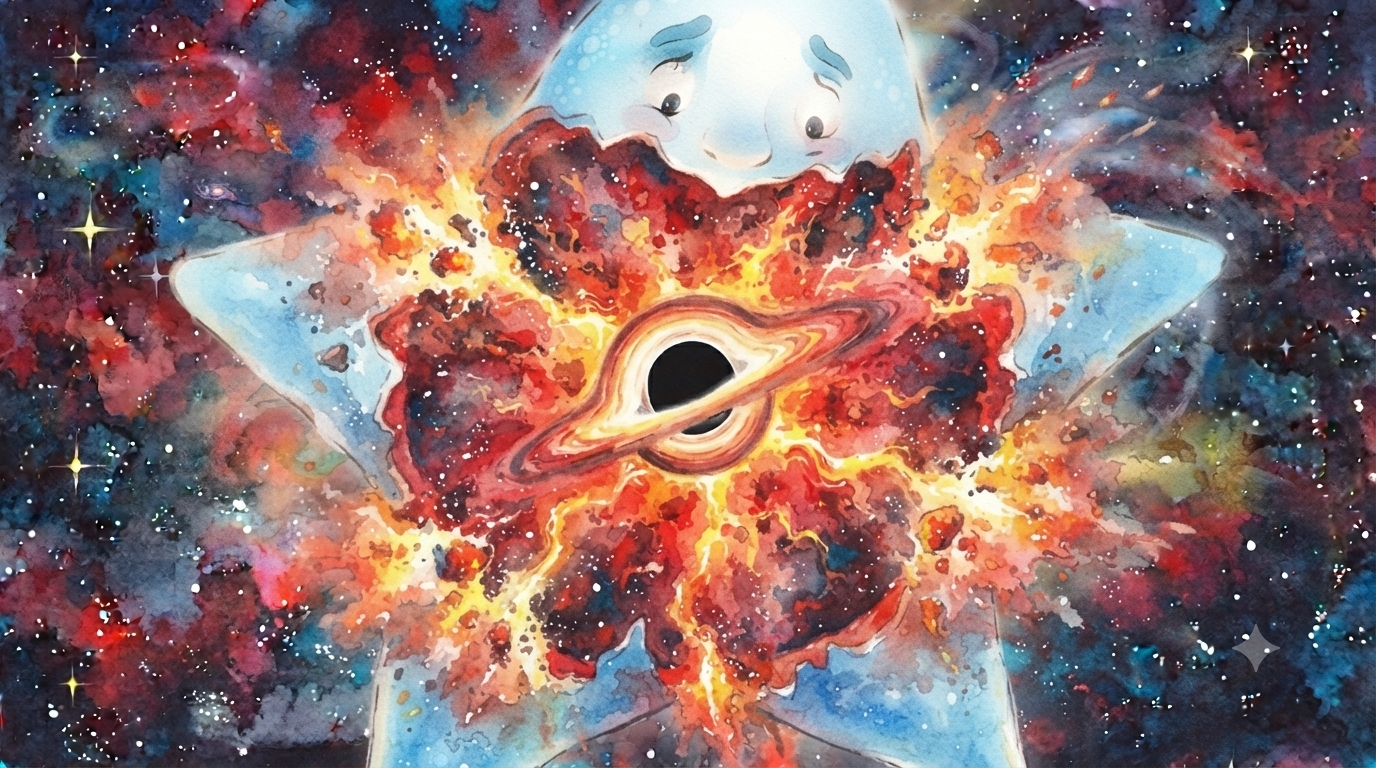 Deep at the center, Gravity quietly continued its work. The remaining core became smaller and smaller until it formed one of the strangest objects in the universe—a black hole. It didn't shine anymore, but it gently bent space around itself like a heavy ball resting on a soft blanket. Astronomers cannot see the black hole directly, yet they discover it by watching nearby stars and glowing gas dance around its invisible presence. Hyperion's light had faded, but his story was far from over. Even today, the atoms in our bodies were once forged inside stars like him, reminding us that in the universe, every ending is also the beginning of something new.
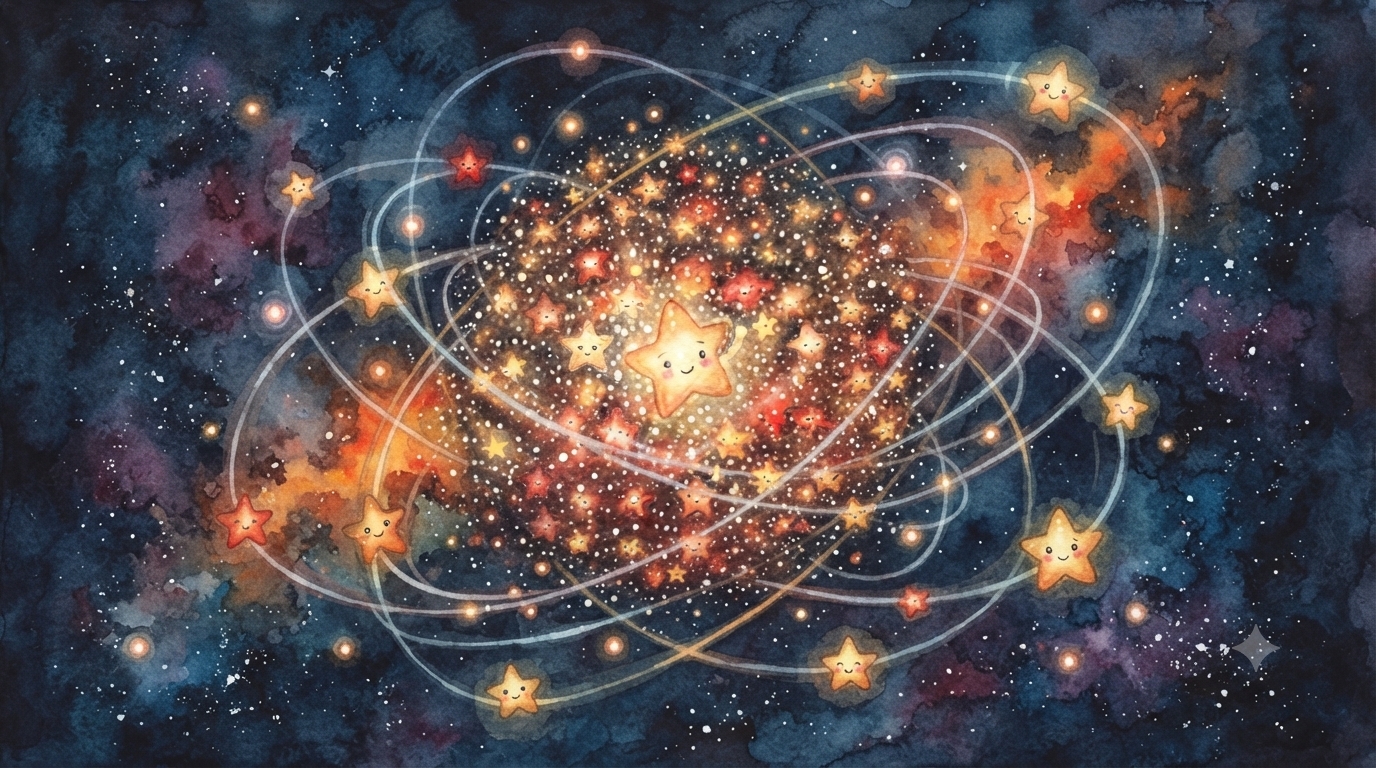 One day, a young blue star from one of the Milky Way's spiral arms wandered close to the cluster and stared in amazement. "I've never seen so many stars together!" it exclaimed. "Don't you ever bump into one another?" Astra laughed softly. "Not very often," she replied. "Gravity keeps us moving in a wonderful dance. We each have our own path, but together we create something much bigger than ourselves." The young visitor looked around at the sea of glittering stars. Some glowed golden, others orange or red, and every one had been shining for an incredibly long time. "How old are you?" the visitor asked quietly. "Older than almost every star you can see in the galaxy's spiral arms," Astra answered proudly. "We were born when the universe was still very young."
 Today, astronomers treasure globular clusters because they are among the oldest objects in our galaxy. Through powerful telescopes they appear as beautiful fuzzy balls of light, but each one contains hundreds of thousands, and sometimes even millions, of stars bound together by gravity. By studying them, scientists learn how the Milky Way formed and how stars evolved long ago. Astra and her enormous stellar family continue their peaceful journey through space, shining together as they have for nearly the entire age of the universe—a beautiful reminder that even across unimaginable distances, friendship, history, and gravity can keep a family together.
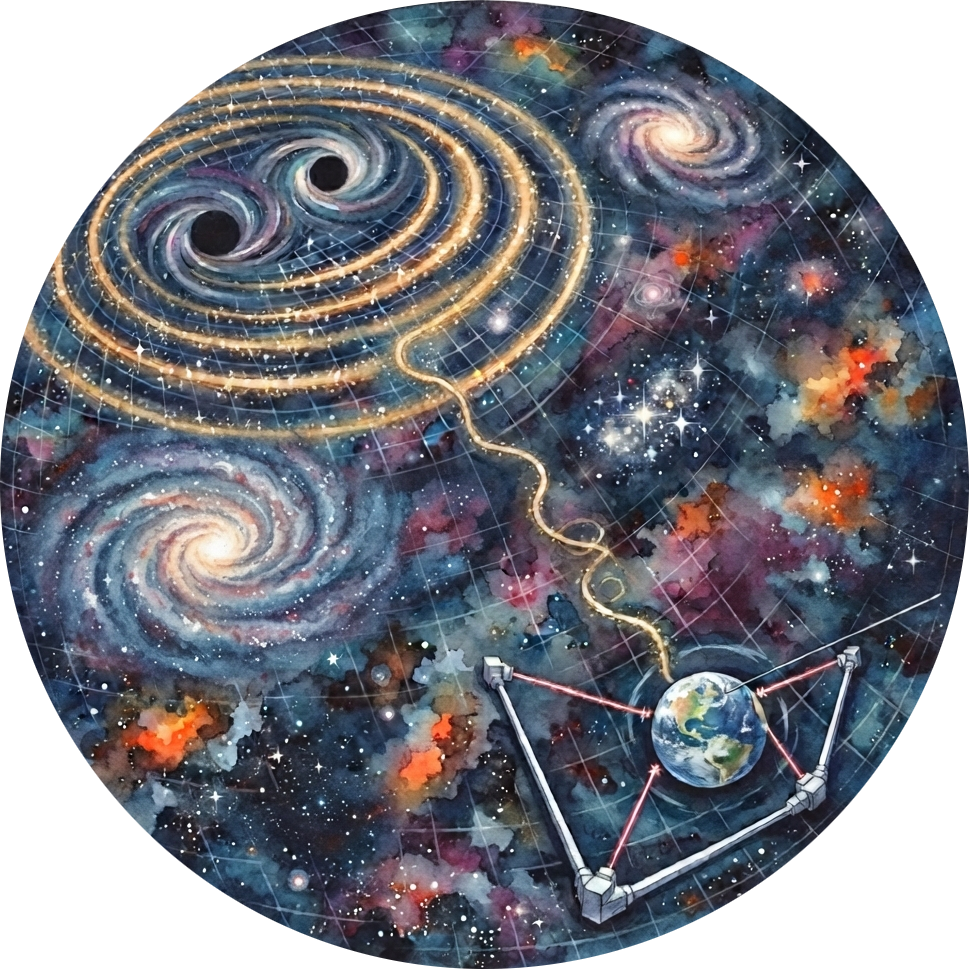
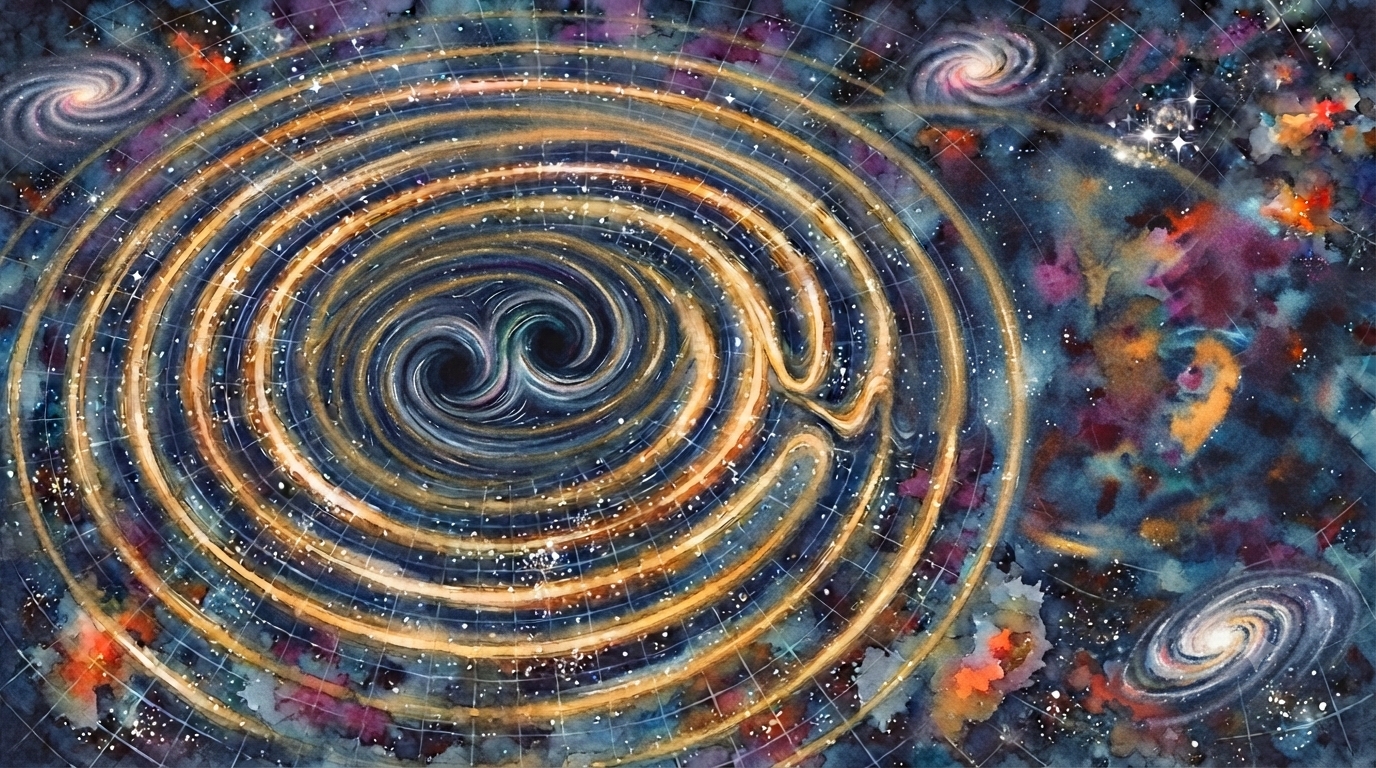 The tiny traveler crossed the darkness for more than a billion years. Along the way it slipped quietly between glowing galaxies, colorful nebulae, sparkling star clusters, and countless lonely stars. It watched new stars being born inside giant clouds of gas and admired planets circling their distant suns. Nothing could stop its journey. Unlike light, which can be blocked by dust or gas, the ripple wasn't made of light at all—it was a tiny stretching and squeezing of space itself. Wherever it passed, the Universe gently stretched in one direction and squeezed in the other before returning to normal again. "The Universe is even bigger and more beautiful than I imagined," the ripple thought as it continued racing onward at the speed of light.
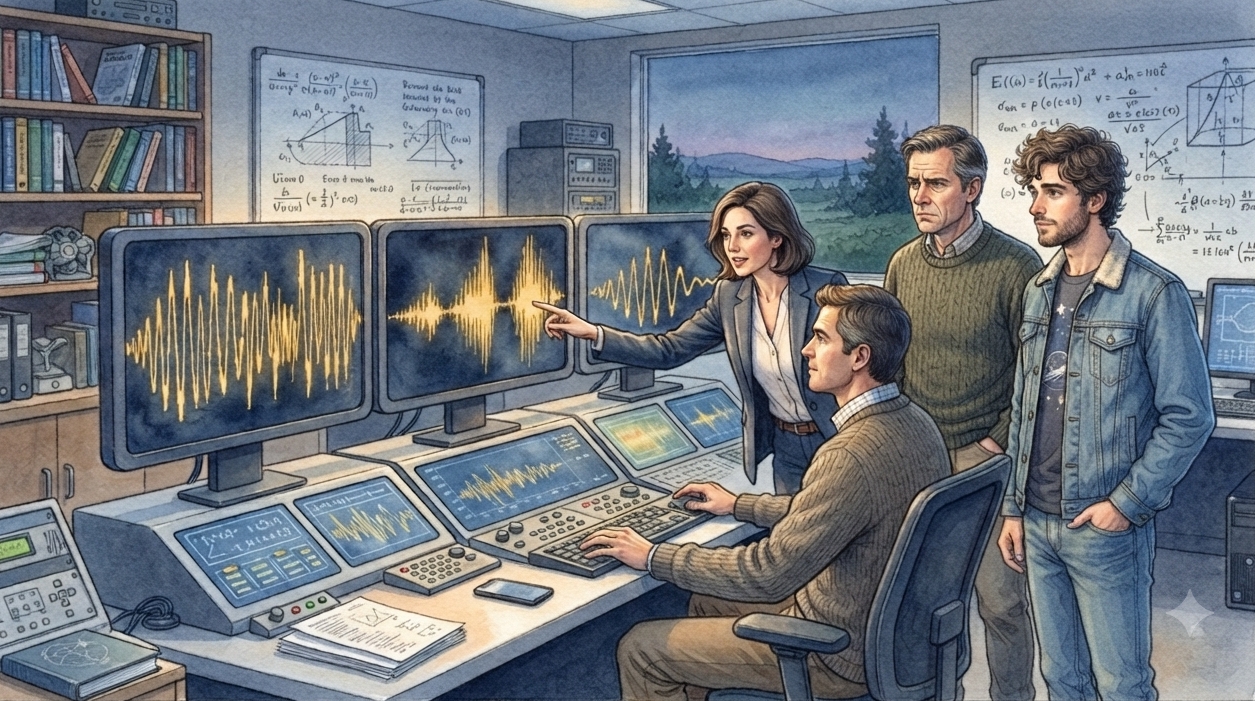 But the ripple's adventure wasn't over. It continued onward into the endless cosmos, carrying its message to places no one has yet explored. Thanks to discoveries like this, astronomers have gained an entirely new way to explore the Universe. They no longer study the cosmos only by looking at light—they can also listen to the gentle whispers traveling through space and time itself. Every gravitational wave tells the story of distant cosmic events, reminding us that the Universe is always sending messages. We simply have to build clever enough instruments to hear them. And perhaps, at this very moment, another tiny ripple is already on its way toward Earth with a brand-new story to tell.
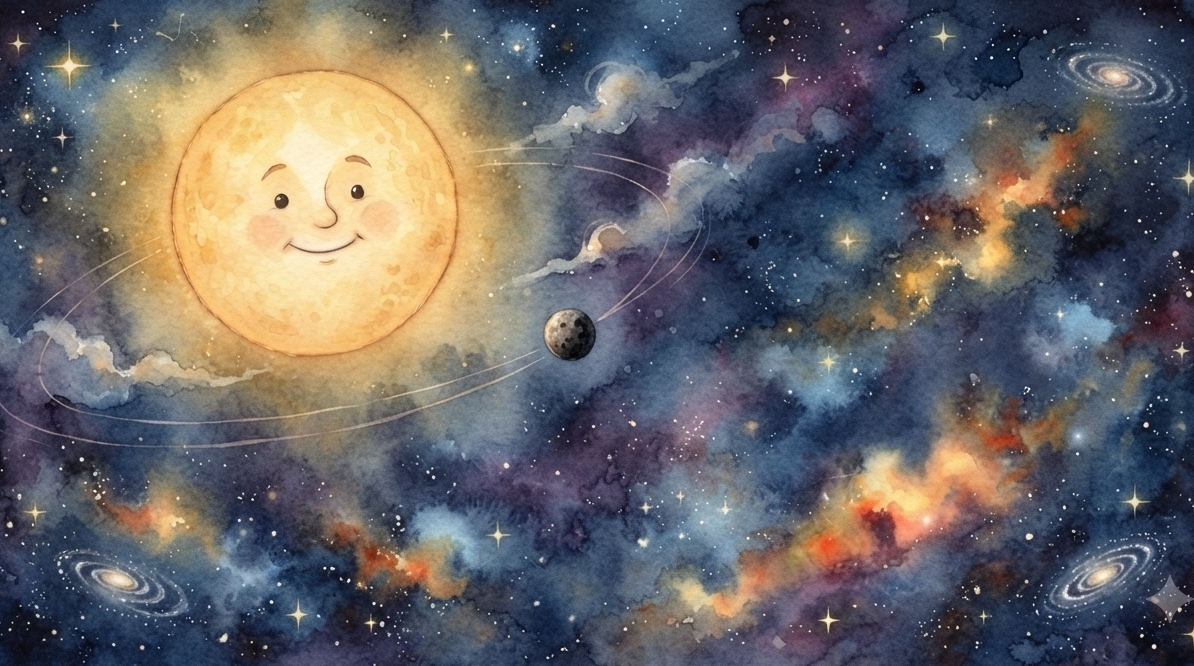 As Pebble reached the part of his orbit that carried him directly in front of the glowing star, something wonderful happened. For just a short time, he covered a tiny piece of the brilliant surface. The star became only the tiniest bit dimmer—so little that nobody nearby would ever notice. But far away, across many trillions of kilometers, astronomers on Earth were carefully measuring the star's brightness. Their computers spotted a small, smooth dip in the light. “Look!” one scientist exclaimed. “The star became just a little fainter. A planet must have passed in front of it!” Pebble had no idea that his little shadow had revealed his presence to an entire civilization.
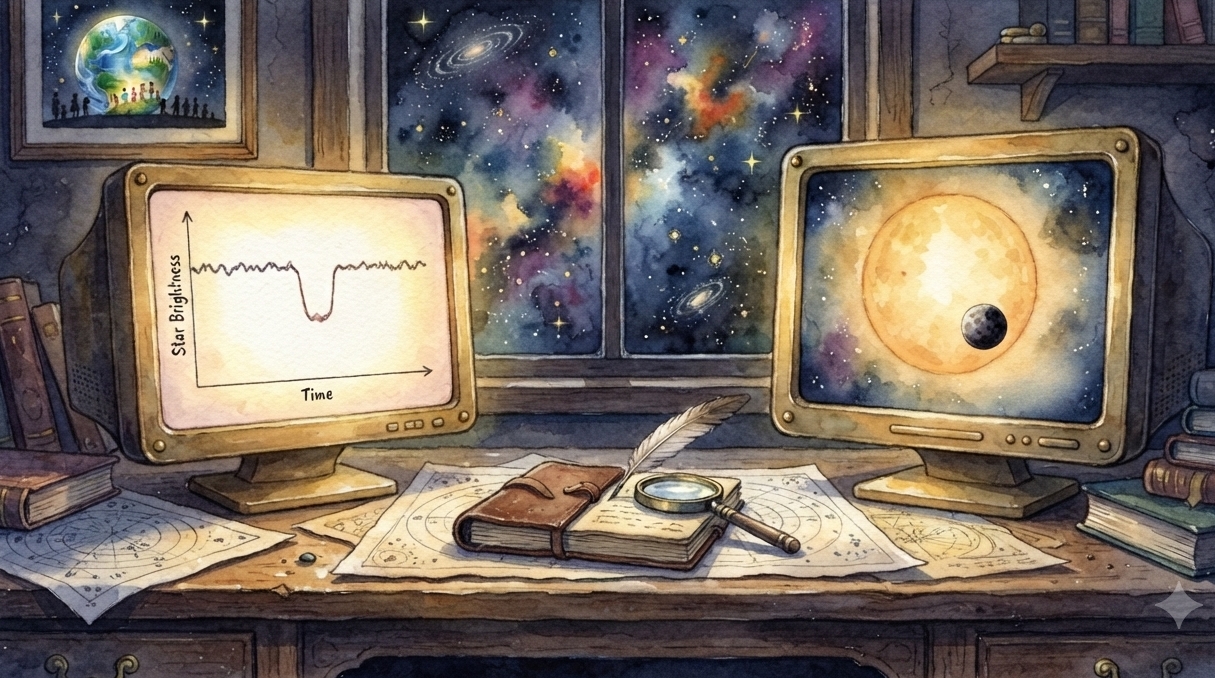 From then on, Pebble no longer wondered whether anyone knew he was there. His tiny shadow had become a message traveling across the universe. Today, thousands of exoplanets have been discovered using this simple but clever technique, called the transit method. Every small dip in a star's light may reveal another hidden world waiting to be explored. And somewhere among those countless distant planets, there may even be one with blue oceans, green forests, and curious children looking up at the stars—wondering if someone, somewhere, has discovered them too.
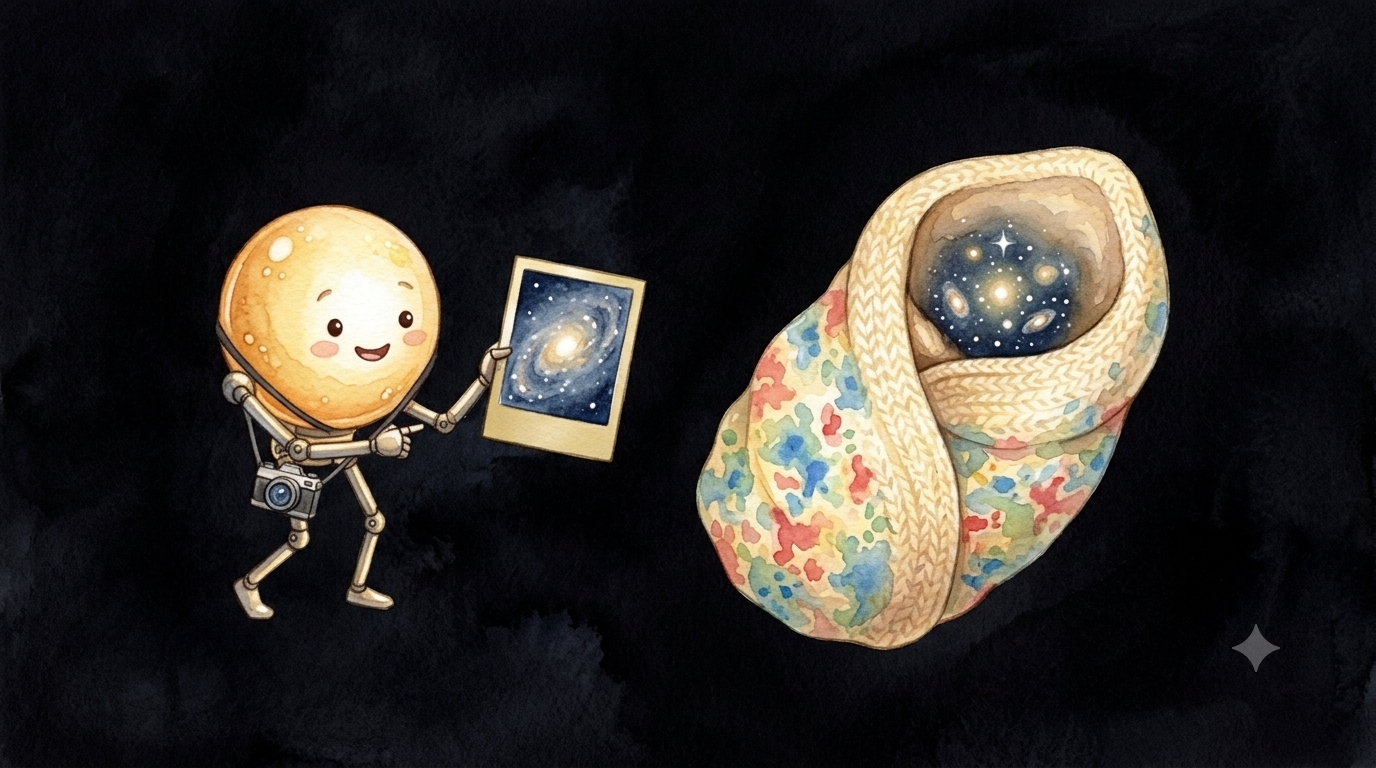 The tiny traveler drifted peacefully through the growing universe. It watched the first stars ignite like little campfires in the darkness. It saw enormous galaxies slowly assemble from swirling clouds of gas, while brilliant nebulae glowed in beautiful shades of red, blue, and purple. Everywhere it went, gravity was hard at work, gathering matter into stars, planets, and eventually entire solar systems. "Those little warm and cool spots I left behind long ago became everything you see today," thought the ancient light proudly. Although billions of years had passed, it still carried a perfect memory of the young universe, like the oldest photograph ever taken.
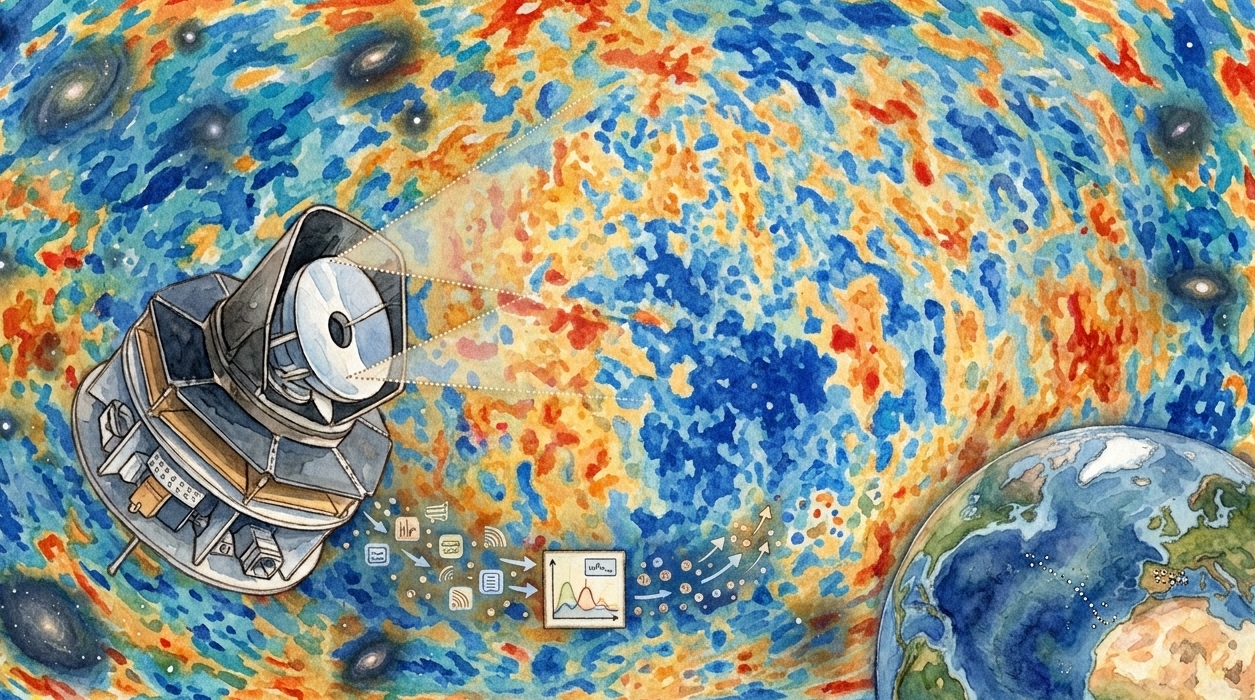 The ancient light continues its endless journey even today, quietly filling every corner of the cosmos. Every second, tiny pieces of this primordial glow pass through our bodies without us noticing. It is a gentle reminder that everything around us—every star, every planet, every tree, every animal, and every person—shares the same incredible beginning. Whenever astronomers study the Cosmic Microwave Background, they are opening the oldest family album in the universe, looking back almost 14 billion years to the moment when everything we know was just beginning.
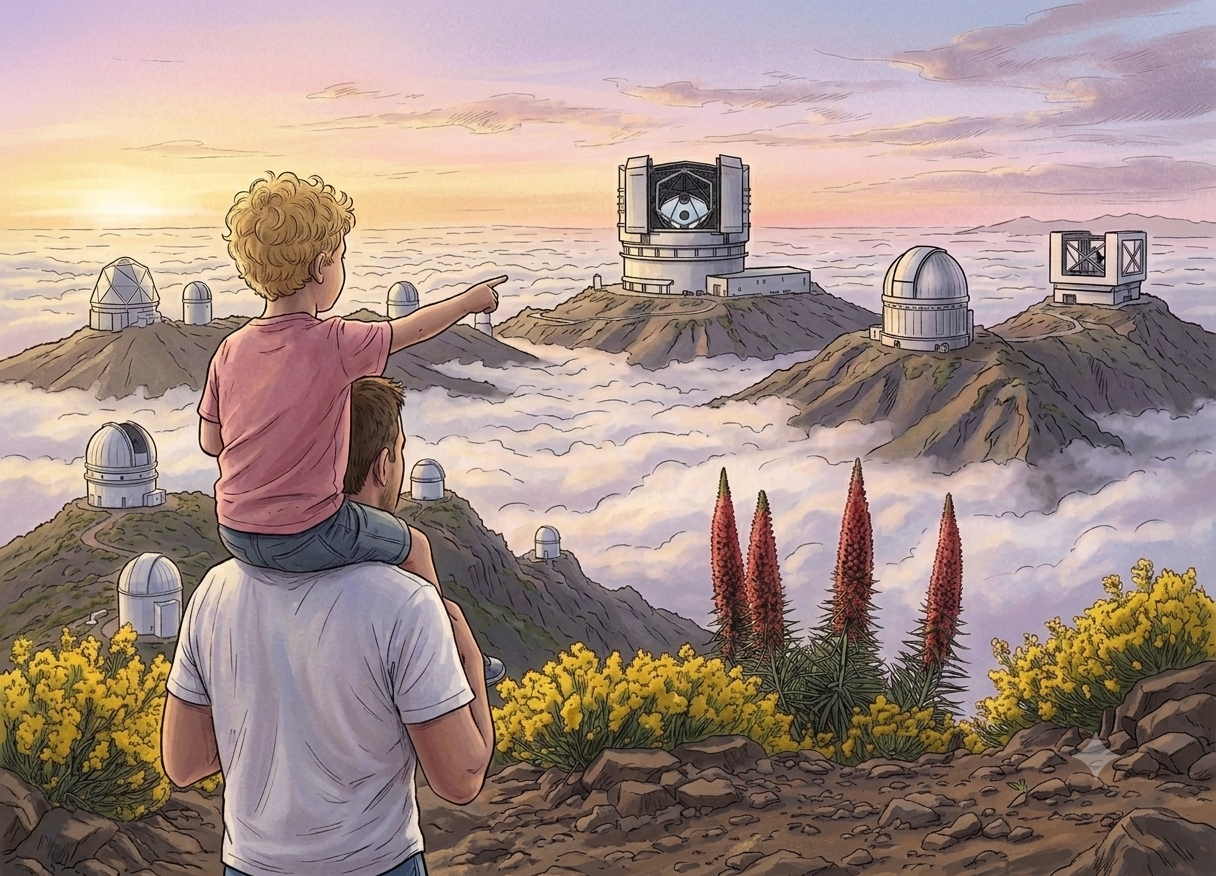 He has also been fascinated by the night sky, often asking questions about the stars and planets. When our family moved to the Canary Islands for my work at the Instituto de Astrofísica de Canarias (IAC), one of his biggest wishes was to visit the observatories at Roque de los Muchachos on La Palma and see the giant telescopes for himself. We eventually made that trip together, and watching his excitement as he stood among the telescopes was a wonderful reminder of why I love sharing astronomy with children.